Cheerful Choices

  • About
  • Recipes
    • High Protein Choices
    • Meal Prep Choices
    • 5 Ingredients or Less
    • Breakfast Choices
    • Snack Choices
    • Main Dish Choices
    • Sweet Treat Choices
    • Vegetarian Choices
  • Coaching + Cooking
  • Partner with Me
  • Media
  • Contact
menu icon
go to homepage
  • About
  • Recipes
    • High Protein Choices
    • Meal Prep Choices
    • 5 Ingredients or Less
    • Breakfast Choices
    • Snack Choices
    • Main Dish Choices
    • Sweet Treat Choices
    • Vegetarian Choices
  • Coaching + Cooking
  • Partner with Me
  • Media
  • Contact
search icon
Homepage link
  • About
  • Recipes
    • High Protein Choices
    • Meal Prep Choices
    • 5 Ingredients or Less
    • Breakfast Choices
    • Snack Choices
    • Main Dish Choices
    • Sweet Treat Choices
    • Vegetarian Choices
  • Coaching + Cooking
  • Partner with Me
  • Media
  • Contact
×

How to Become a Registered Dietitian Nutritionist (steps + career options)

May 11, 2019 by Mackenzie Burgess, RDN Leave a Comment

"I want to become a registered dietitian nutritionist." Whenever I tell people about this career goal, they often recognize it has something to do with helping people with food and nutrition. However, most people don't quite understand all of the details that go into getting this credential or the variety of career options available to dietitians. So let's break it down.

IMG 8019

First off, what is the difference between a dietitian and a "nutritionist"?

Registered dietitian (RD) and registered dietitian nutritionist (RDN) are the same thing. "RDN" is the more updated credential, simply used to clarify the title. However, a "nutritionist" alone is not the same thing and is much more loosely defined. For example, your friend who follows tons of nutrition accounts on insta or reads all the latest articles on the top diets could called themself a nutritionist. Although some nutritionists may have a basic knowledge of nutrition, they likely should not be giving in-depth education to individuals and legally cannot provide medical nutrition therapy.

On the other hand, RDNs undergo a rigorous required education, internship, and test process. Dietitians use evidence-based knowledge to provide education and coaching. If you ever have questions about nutrition or would like to receive nutrition services, ensure you are seeing someone with "RDN" behind their name to ensure they are the expert in the field. I wanted to be taken seriously when it comes to educating others, so I chose to undergo the extensive process to become a RDN.

What are the steps to become a dietitian?

  1. First, you have to complete a bachelor's degree at an ACEND-accredited university. If you're wanting to pursue this career path but completed a degree in an unrelated field, no worries. You can still go back and take the required classes. See this article for information on this. Starting in 2024, you will also have to complete a master's degree.
  2. Next, you have to complete a dietetic internship. (more on this below)
  3. After all this required education is complete, you must pass the RD exam and then you can finally receive the credential behind your name.
Learn the difference between a registered dietitian and a nutritionist. Learn about the steps to become a RDN, the dietetic internship process, and career options.

More about dietetic internships

Internships are typically 9 months to 2 years long. Some programs combine a master's degree and the internship into one. In the internship you gain first hand experience in the field. The internship is broken up into different rotations covering the areas of community, clinical, and food service.

  • Some learning experiences in the community rotation include: cooking demos at farmers markets or TV, outpatient counseling, handout development, and leading classes at local wellness centers.
  • Some learning experiences in the clinical rotation include: gain experience in providing nutritional care for all areas of the hospital including pediatrics, cardiac, oncology, ICU, renal, and more.
  • Some learning experiences in the food service rotation include: food safety procedures, menu development, and food production.
Learn the difference between a registered dietitian and a nutritionist. Learn about the steps to become a RDN, the dietetic internship process, and career options.

Landing this internship is one tricky process

It is not a typical internship you think of where you apply, get your choice out of ones you get accepted to, and get paid for your work during the internship. Here's how the process goes.

  • First, you have to look through hundreds of programs to decide which one is the best fit based on things like rotation emphasis, location, and cost. Most internships, YOU pay for. "What?? The internship doesn't pay you?" Nope. This is because it is essentially like another year of school with diverse learning experiences.
  • When you settle on your top programs, you apply through an online centralized portal. Then, you undergo interviews and rank the programs in your preferred order.
  • Finally, based on your rankings and how the programs rank you, you will receive a "match" or not. The match rate is only 50%, making this process even more stressful. On a set date and time, you will open up the portal and see if you get matched to a program.

When I opened up that portal at 5pm sharp and saw I received a match to the OSF Saint Francis Medical Center Dietetic Internship in Peoria, IL. I was so excited because this was truly the perfect program for me.

Learn the difference between a registered dietitian and a nutritionist. Learn about the steps to become a RDN, the dietetic internship process, and career options.

So you're a dietitian… now what?

After you complete your internship and pass the RD exam, there are many different areas you can work in as a RDN. Options include working in a hospital providing counseling and administering medical nutrition therapy for a variety of different conditions, sports nutrition working for a professional team or even the olympics, nutrition communications and marketing for businesses, a spokesperson on social media, conducting research, counseling in public health care settings like WIC, working in the restaurant or meal kit industry consulting with chefs, private practice running your own nutrition business, and so much more. My goals right now are to start doing virtual nutrition counseling and continue to pursue healthy recipe development.

Click here to learn more about the process to become a registered dietitian and the endless career options available.

Learn the difference between a registered dietitian and a nutritionist. Learn about the steps to become a RDN, the dietetic internship process, and career options.

Thai Peanut Tofu Bowl with Rice & Seasonal Vegetables

May 3, 2019 by Mackenzie Burgess, RDN Leave a Comment

Disclosure: This post has been sponsored by SEEDS OF CHANGE™ . All opinions are my own; I never feature a brand that I don't love!

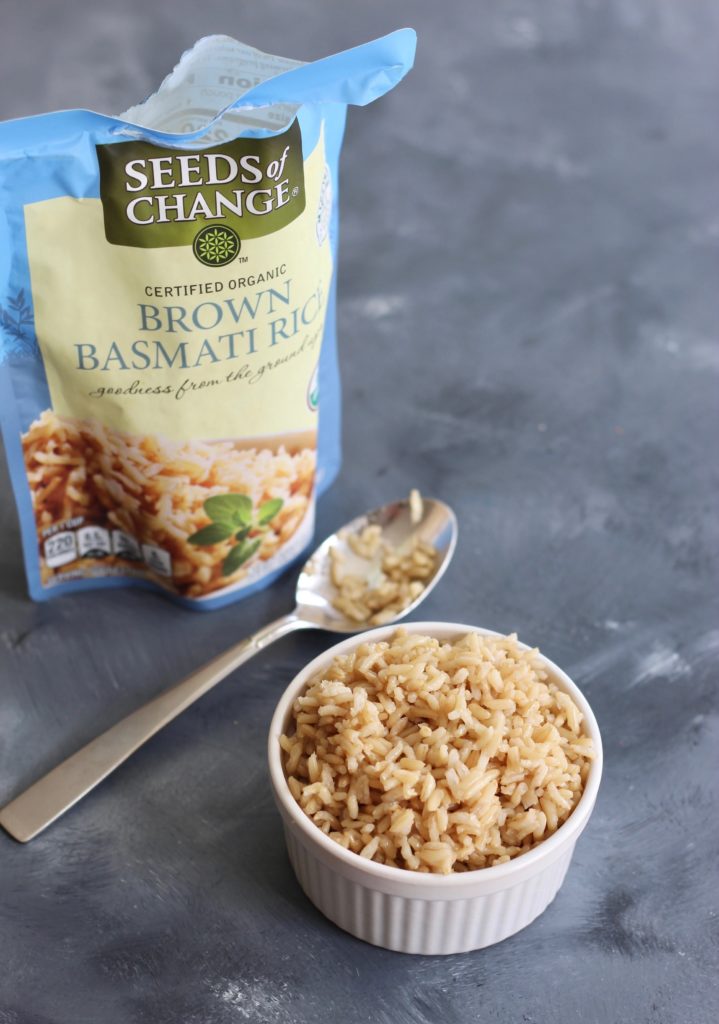
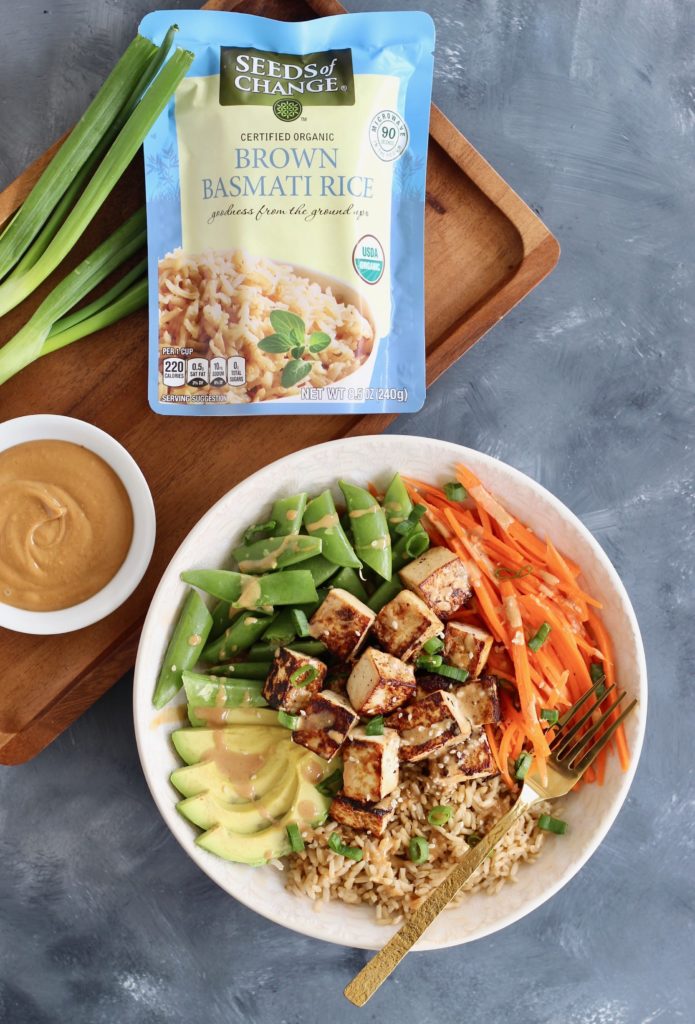
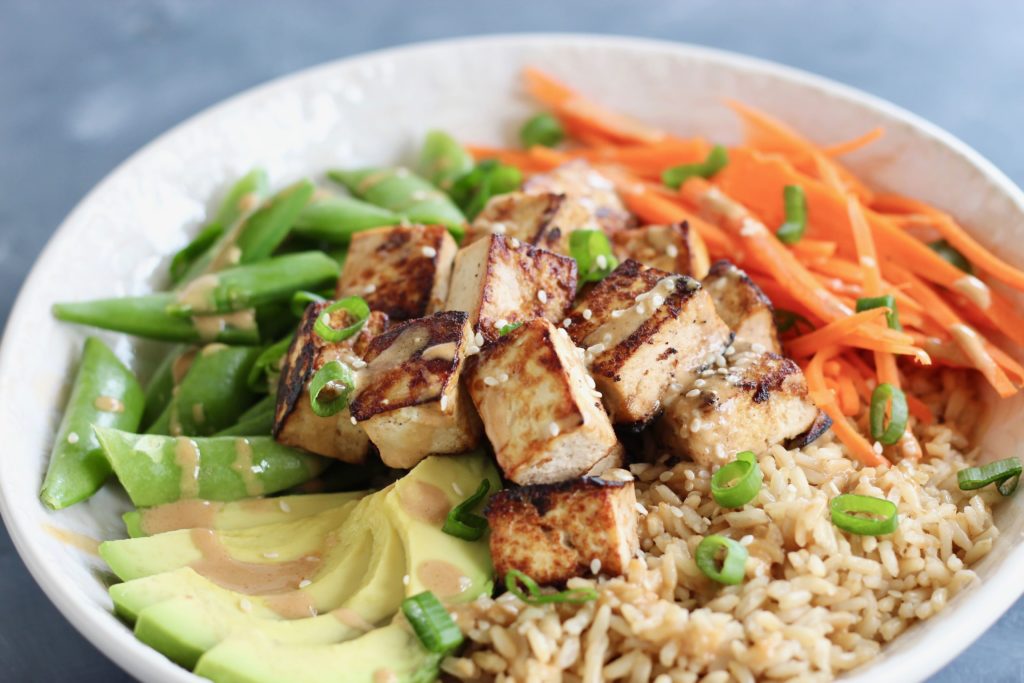
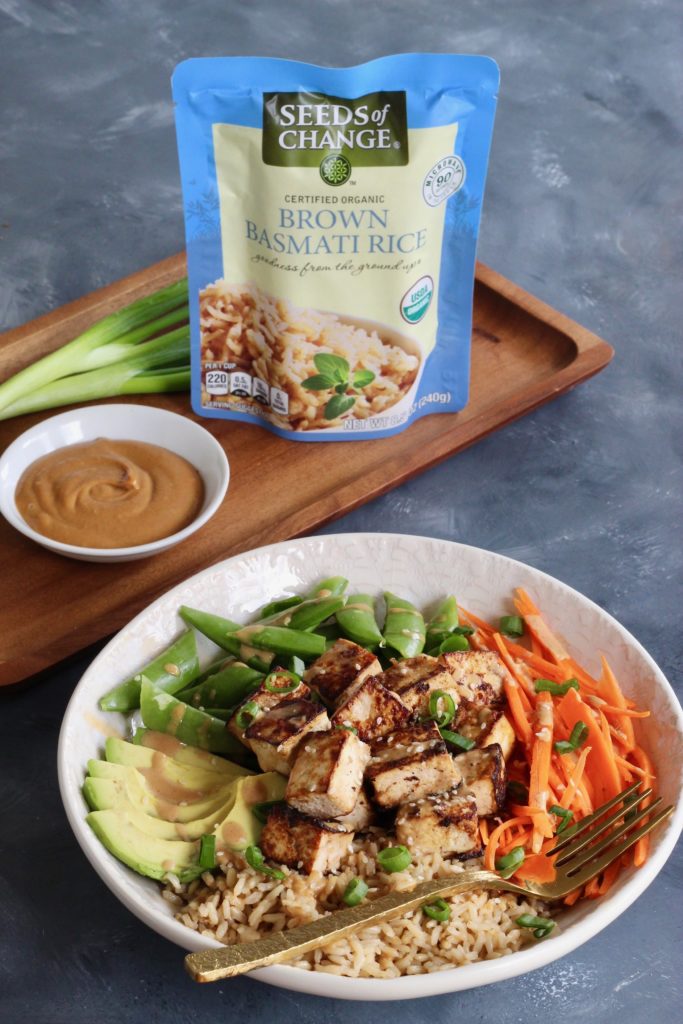
#ad Incorporate seasonal ingredients, crispy tofu, and quick-cooked brown rice into this super easy Thai Peanut Tofu Buddha Bowl to throw together for your next meal. @SeedsOfChange Brown Basmati Rice is convenient without sacrificing taste, quality, or nutrition. #BeASeedOfChange

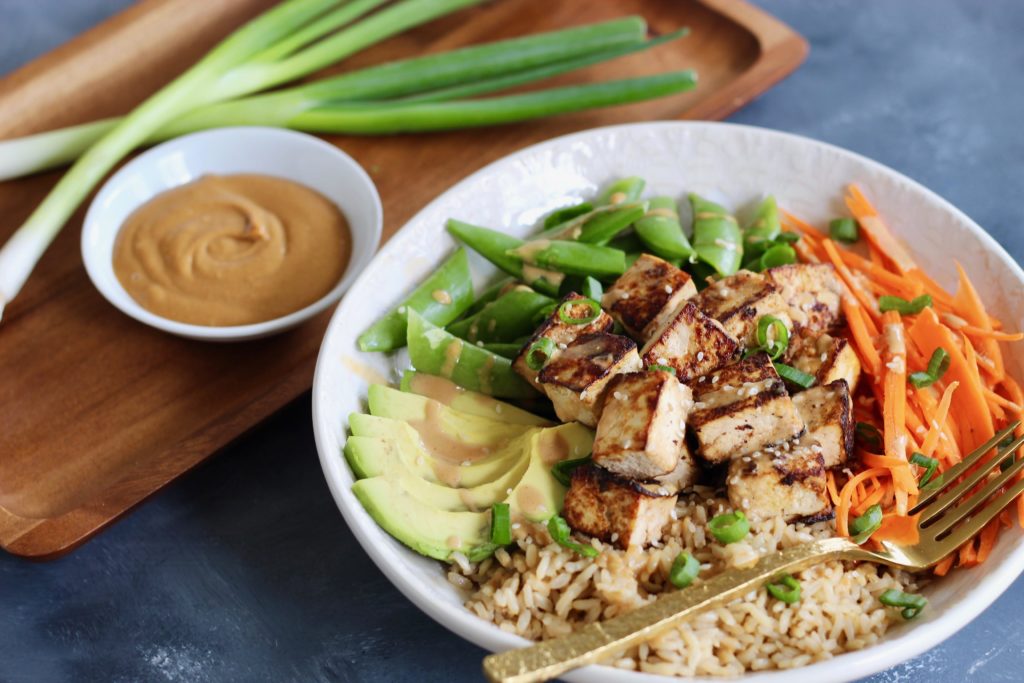
Spring means more produce is coming into season. Green onions, peas, carrots, garlic-all the good stuff. Incorporate these seasonal ingredients into this super easy Thai Peanut Tofu Bowl to throw together for your next meal.

#ad Incorporate seasonal ingredients, crispy tofu, and quick-cooked brown rice into this super easy Thai Peanut Tofu Buddha Bowl to throw together for your next meal. @SeedsOfChange Brown Basmati Rice is convenient without sacrificing taste, quality, or nutrition. #BeASeedOfChange

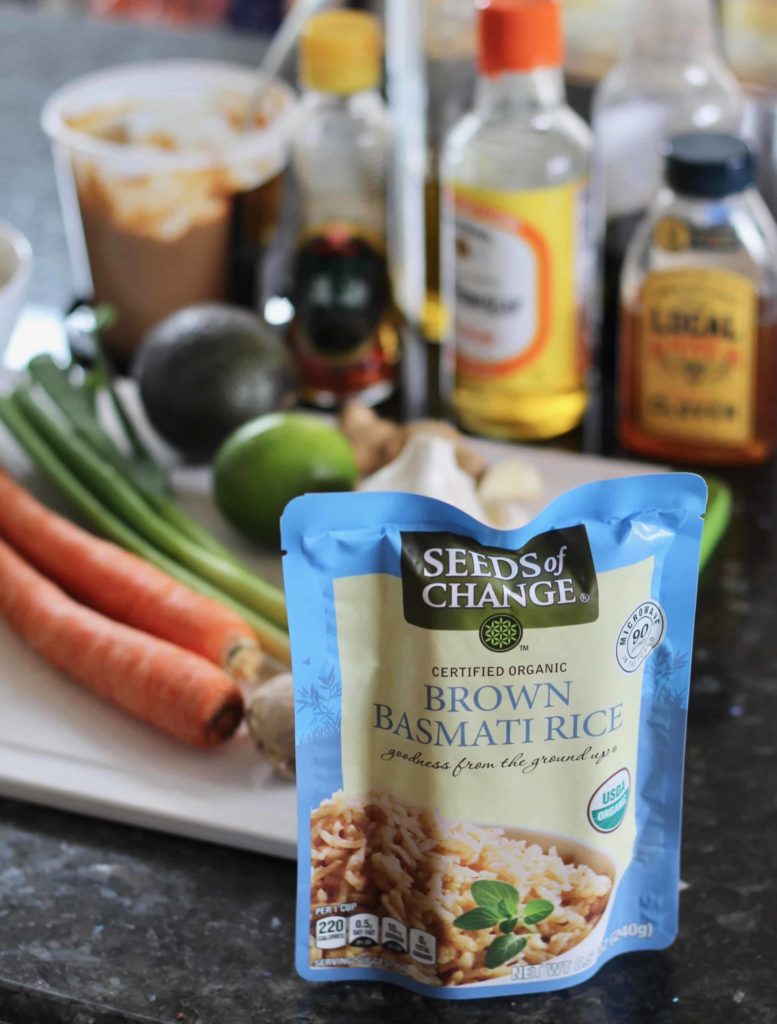
As much as I love brown rice, it's difficult to make a quick meal with it because it takes about 40-50 minutes to cook. That's why I was so excited to discover SEEDS OF CHANGE™ Brown Basmati Rice at my local Safeway! Whole grains are an important part of a balanced diet. "Whole" grains such as brown rice, quinoa, oats, and whole wheat bread have all three parts of the grain: the bran, germ, and endosperm. These parts are filled with fiber, vitamins, and minerals. On the other hand, white or "refined" grains, like white rice or white bread, undergo a process that removes the germ and bran, therefore removing key nutrients.

Aim to swap your refined grains for whole grains and eat at least 3 servings of whole grains every day. Try incorporating more whole grains into your diet with recipes like overnight oats, quinoa-filled granola, and brown rice bowls.

#ad Incorporate seasonal ingredients, crispy tofu, and quick-cooked brown rice into this super easy Thai Peanut Tofu Buddha Bowl to throw together for your next meal. @SeedsOfChange Brown Basmati Rice is convenient without sacrificing taste, quality, or nutrition. #BeASeedOfChange

In our busy world, convenience is key-but fast-paced food often comes at the cost of our health. Fortunately, that's not the case here. This Brown Basmati Rice is convenient without sacrificing taste, quality, or nutrition. This flavorful whole grain rice packet is heated in either a pan or the microwave and is ready to eat in just 90 seconds!

#ad Incorporate seasonal ingredients, crispy tofu, and quick-cooked brown rice into this super easy Thai Peanut Tofu Buddha Bowl to throw together for your next meal. @SeedsOfChange Brown Basmati Rice is convenient without sacrificing taste, quality, or nutrition. #BeASeedOfChange

"We donate 1% of our profits to help more people enjoy real food, grown from seed."

I also love this company because a portion of their sales go to support their SEEDS OF CHANGE™ Grant Program, which has awarded over $1,000,000 to help community-based gardens and farms. Among other things, this can help provide fresh food and jobs for local residents. With the ever-increasing problems of food and job insecurity in our nation, this is so important.

I picked this product up at my local Safeway in the grains, rice, and beans aisle. Safeway also has all other ingredients needed for this recipe, including the fresh spring produce, natural peanut butter, and tofu.

#ad Incorporate seasonal ingredients, crispy tofu, and quick-cooked brown rice into this super easy Thai Peanut Tofu Buddha Bowl to throw together for your next meal. @SeedsOfChange Brown Basmati Rice is convenient without sacrificing taste, quality, or nutrition. #BeASeedOfChange

This recipe is focused on seasonal spring veggies but if you don't have the same vegetables on hand, don't fret. You can use whatever veggies you have in your fridge or find in season at your local farmers' market. Try using kale, cucumbers, mixed greens, cabbage, edamame or any other favorite combos. As a general rule of thumb, you should have about 4-6 cups of vegetables for 4 servings.

#ad Incorporate seasonal ingredients, crispy tofu, and quick-cooked brown rice into this super easy Thai Peanut Tofu Buddha Bowl to throw together for your next meal. @SeedsOfChange Brown Basmati Rice is convenient without sacrificing taste, quality, or nutrition. #BeASeedOfChange

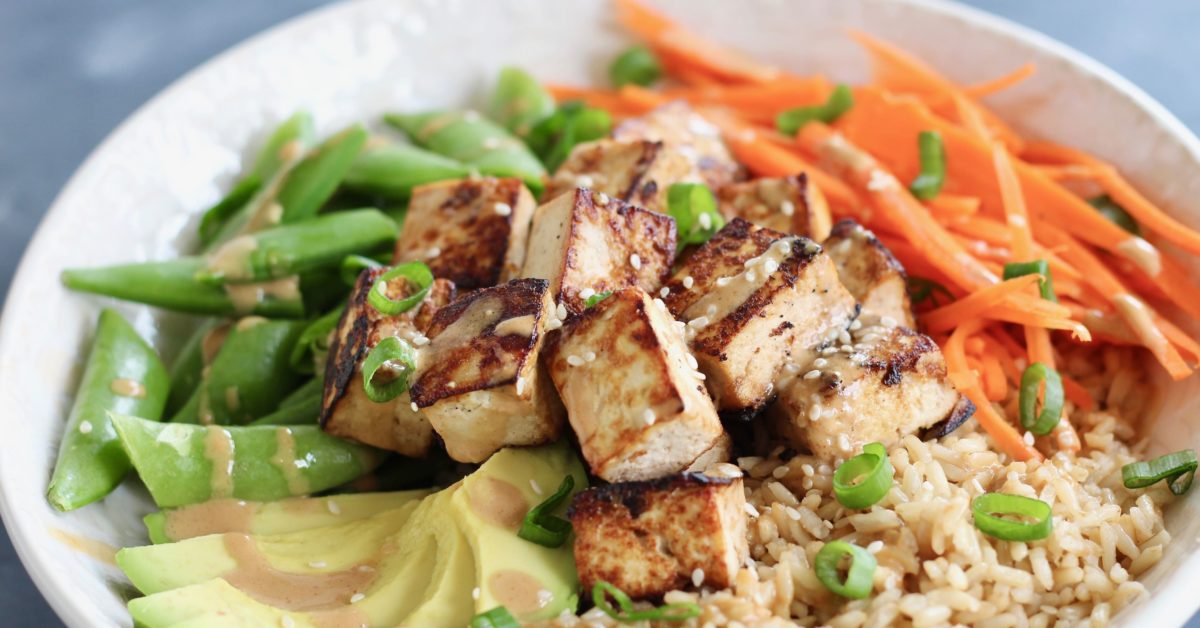
This umami-rich thai peanut sauce is seriously #SauceGoals. It pairs so well with the vegetables and crispy tofu. I love to throw this sauce over fresh greens in a salad or noodle bowls, as well.

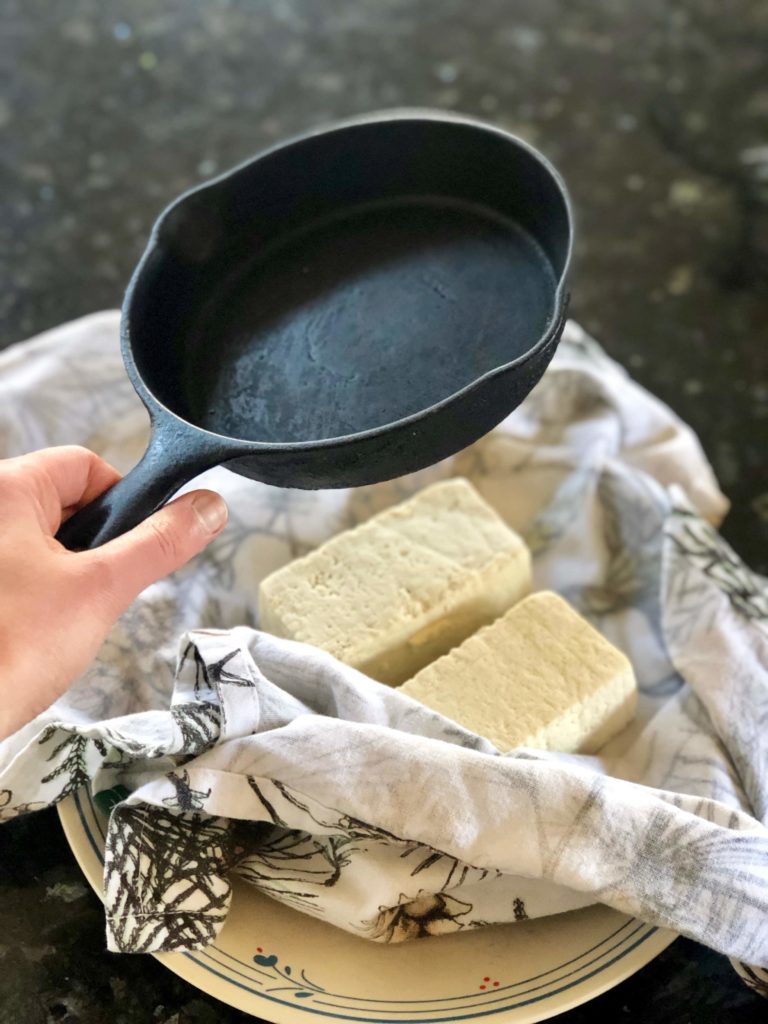
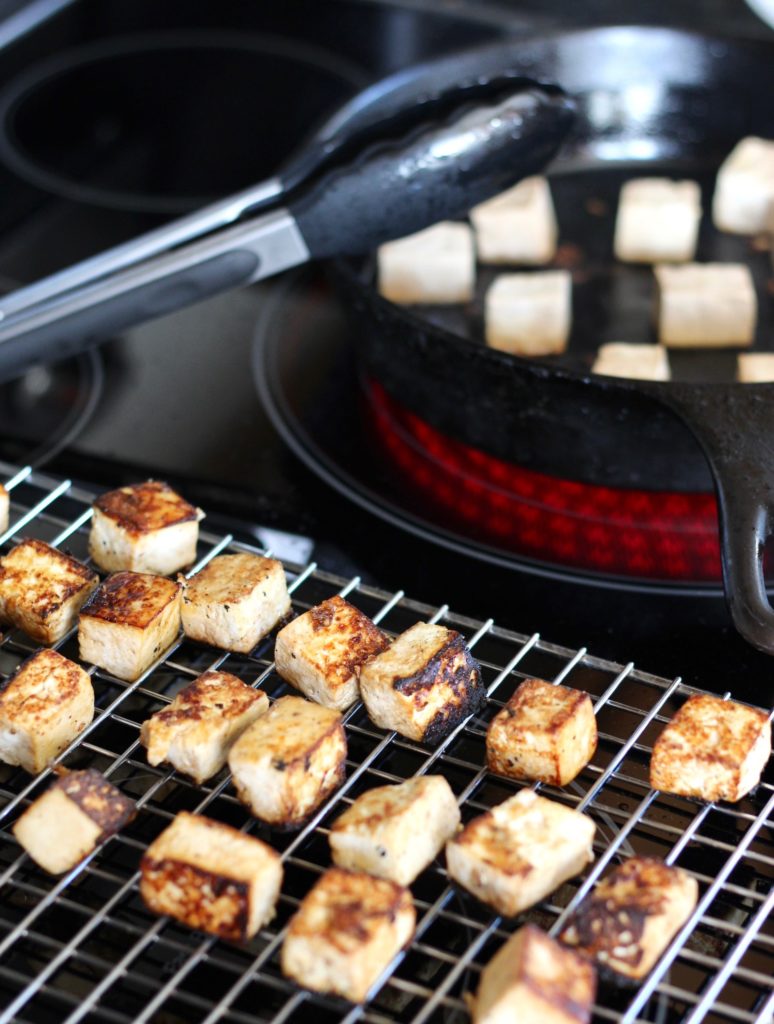
If you haven't worked with tofu before, make sure to follow the instructions for draining and pressing the tofu. Alternatively, you can buy super firm, pre-pressed tofu. You can also bake tofu, but I like to simply pan-fry it so I don't have to heat up the oven. I was never really a huge fan of tofu until I learned how to infuse it with the right flavors and make it crispy. Now it's one of my go-to meatless protein sources. If you're still not convinced, you can substitute the tofu for another protein source like tempeh, chicken, or chickpeas.

  • Thai Peanut Tofu Buddha Bowl with Seasonal Vegetables 0608
  • Thai Peanut Tofu Buddha Bowl with Seasonal Vegetables 1357

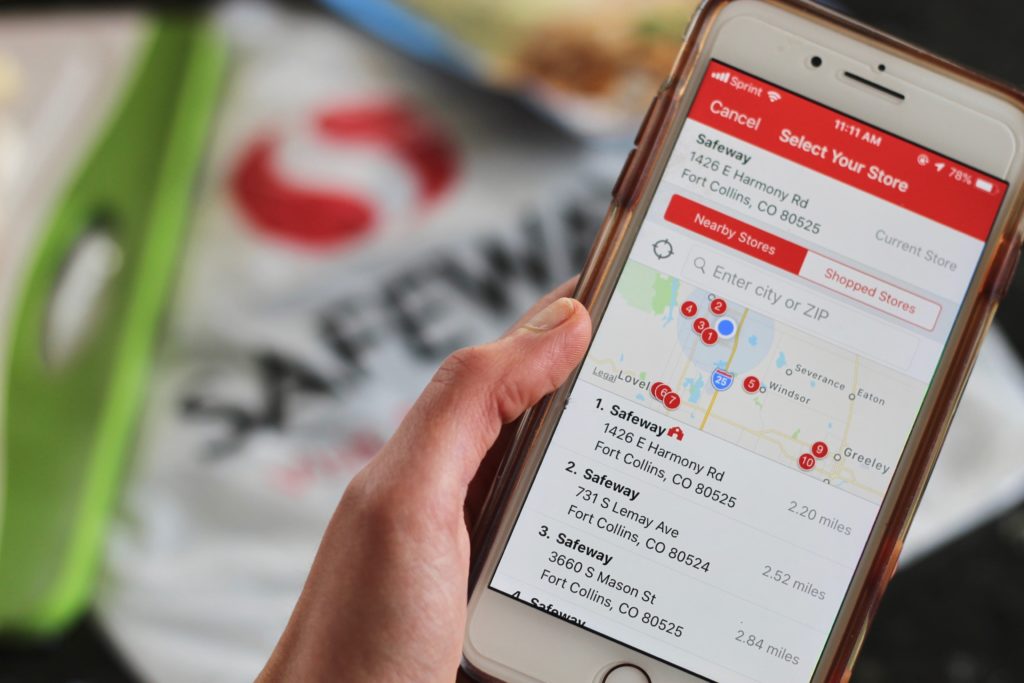
Head over to your local Safeway and pick up a few packets of this Brown Basmati Rice, along with other delicious flavors from the SEEDS OF CHANGE™ brand. Be sure to download the Safeway app, plug in your local store, and add coupons to your app so you can grab deals on the ingredients. I try to purchase mostly organic when possible. If you forget to bring your own grocery tote, reuse your plastic grocery bags to collect trash in your vehicle, to separate dirty laundry when traveling, or donate them to local food banks and thrift shops.

#ad Incorporate seasonal ingredients, crispy tofu, and quick-cooked brown rice into this super easy Thai Peanut Tofu Buddha Bowl to throw together for your next meal. @SeedsOfChange Brown Basmati Rice is convenient without sacrificing taste, quality, or nutrition. #BeASeedOfChange

Seasonal bowl recipes have been my favorite recipes to develop lately because they are completely customizable and incredibly flavorful. What's your favorite bowl combination?

#ad Incorporate seasonal ingredients, crispy tofu, and quick-cooked brown rice into this super easy Thai Peanut Tofu Buddha Bowl to throw together for your next meal. @SeedsOfChange Brown Basmati Rice is convenient without sacrificing taste, quality, or nutrition. #BeASeedOfChange
Thai Peanut Tofu Buddha Bowl with Seasonal Vegetables 1386
Print Recipe
5 from 2 votes

Thai Peanut Tofu Bowl with Rice & Seasonal Vegetables

Incorporate seasonal ingredients, crispy tofu, and quick-cooked brown rice into this super easy Thai Peanut Tofu Bowl to throw together for your next meal. 
Prep Time15 minutes mins
Cook Time15 minutes mins
Total Time30 minutes mins
Cuisine: Thai
Keyword: dairy free, gluten free, vegan
Servings: 4
Calories: 600kcal
Author: Mackenzie Burgess, RDN

Ingredients

Bowl Ingredients:

  • 16 oz super firm tofu, drained, pressed, and cubed into 1 inch pieces (see directions below)
  • 1 teaspoon cornstarch
  • 1 tablespoon rice vinegar
  • 1 tablespoon soy sauce (or tamari if gluten-free)
  • 1 tablespoon sesame oil
  • 1 tablespoon olive oil
  • 2 packets Brown Basmati Rice
  • 2 cups sugar snap peas, halved
  • 2 cups carrots, shredded or julienned
  • 1 large avocado, sliced
  • ½ cup green onions, sliced
  • 1 tablespoon sesame seeds, for garnish

Peanut Sauce: (makes about 1 cup)

  • ½ cup creamy peanut butter
  • 2 tablespoons fresh lime juice, about ½ large lime
  • 2 tablespoons rice vinegar
  • 2 tablespoons low-sodium soy sauce or tamari if gluten-free
  • 1 tablespoon maple syrup
  • 1 tablespoon sesame oil
  • ½ teaspoon sriracha, or more as desired
  • 2 teaspoons fresh ginger, roughly chopped
  • 2 cloves garlic, roughly chopped
  • ¼ cup water
instacartGet Recipe Ingredients

Instructions

  • Prepare tofu: Wrap drained tofu block in a clean kitchen towel or paper towels and place on a plate. Place a heavy object on top for 15-30 minutes to press out liquid. You can press the tofu overnight in the fridge as well. Alternatively, you can use super firm, pre-pressed tofu.
  • While waiting for the tofu to drain, add all peanut sauce ingredients to a bowl and whisk with a fork until until smooth.
  • When tofu is drained, cut into 1 inch cubes. Toss prepared tofu in cornstarch, rice vinegar, soy sauce, and sesame oil.
  • Heat a large pan over medium-high heat and add the 1 tablespoon olive oil. Add cubes of tofu in a single layer to the pan and pan-fry all sides until golden, about 10 minutes. When tofu is done cooking, set aside on a cooling rack. Add brown rice into same pan and heat until warm. Alternatively, you can microwave the brown rice according to package instructions for 90 seconds.
  • To plate: Divide rice, vegetables, and tofu between four bowls. Drizzle with peanut sauce. Garnish with green onions and sesame seeds. Store any leftovers in the refrigerator for up to 4 days.

Nutrition
Serving: 1g | Calories: 600kcal | Carbohydrates: 45g | Protein: 26g | Fat: 41g | Saturated Fat: 7g | Polyunsaturated Fat: 30g | Sodium: 950mg | Fiber: 12g | Sugar: 13g

save this tofu bowl recipe on pinterest:

#ad Incorporate seasonal ingredients, crispy tofu, and quick-cooked brown rice into this super easy Thai Peanut Tofu Buddha Bowl to throw together for your next meal. @SeedsOfChange Brown Basmati Rice is convenient without sacrificing taste, quality, or nutrition. #BeASeedOfChange

No Added Sugar for a Week: Diet Thoughts and Main Takeaways

April 23, 2019 by Mackenzie Burgess, RDN Leave a Comment

What is the No Added Sugar Diet?

Eliminating sugar from the diet for a week, month, or even a year has been a popular diet form recently. The focus of these diets is to eliminate added sugars which are not naturally occurring sugars in fruit, vegetables, and milk. Added sugars including:

  • anhydrous dextrose
  • brown sugar
  • confectioner's powdered sugar
  • corn syrup
  • corn syrup solids
  • dextrose
  • fructose
  • high-fructose corn syrup (HFCS)
  • honey
  • invert sugar
  • lactose
  • malt syrup
  • maltose
  • maple syrup
  • molasses
  • nectars (e.g., peach nectar, pear nectar)
  • pancake syrup
  • raw sugar
  • sucrose
  • sugar
  • white granulated sugar
If you’re thinking about trying out the No Sugar Added Diet, read this article with diet thoughts and takeaways before you start. Ultimately, the idea of intuitive eating and a balanced diet might be better.
New Nutrition Facts Label including "Sugars" vs "Added Sugars"

The idea is to see how your body feels after the "detox", with many reporting improved energy, younger-looking skin, and weight loss.

The American Heart Association's recommendation for added sugar is no more than 25 grams per day for women, and no more than 36 grams per day for men. Most Americans are far surpassing this limit with sugar-laden items like energy drinks, desserts, sweetened cereals, and condiments.

Thoughts

I decided to try to eliminate all forms of added sugar for a week to bring more awareness to the sugar in my diet and gain a better understanding of this dietary pattern that people choose to follow. My diet is already pretty low in added sugars. I naturally get most of the sugars in my diet from fruit and dairy products, with occasional added sugar from salad dressings, whole grain cereals, or dark chocolate. For this reason, I assumed this week would be a breeze… I was wrong.

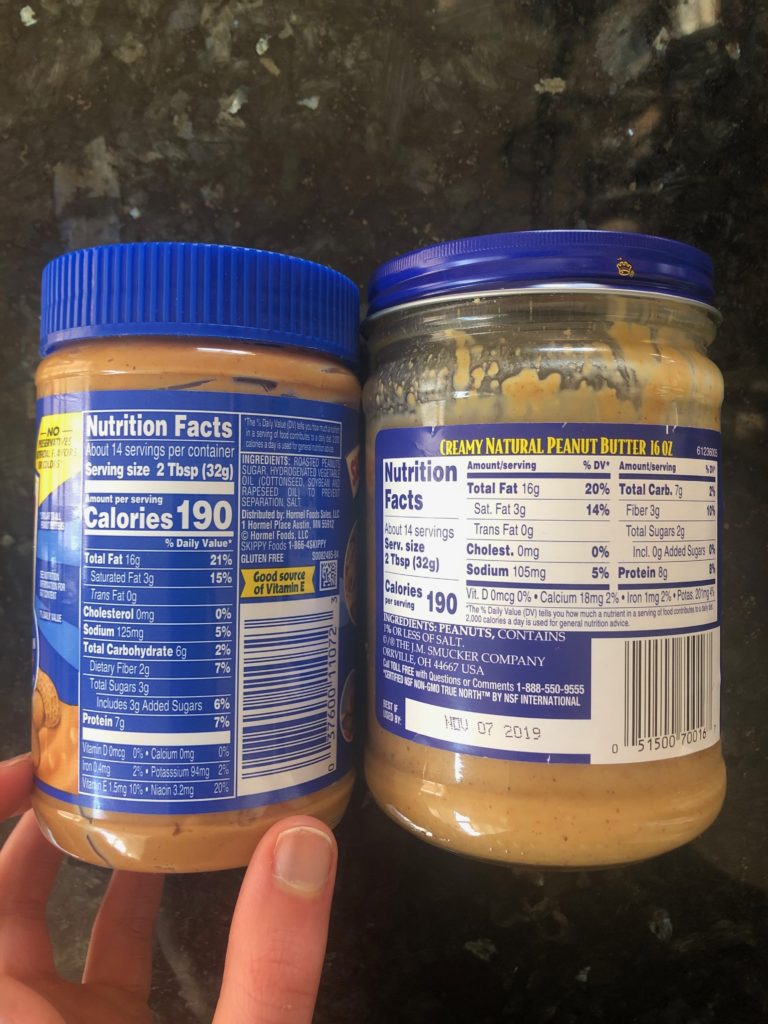
Throughout the week, I became more aware of sneaky added sugars hidden in other products such as granola bars, coffee drinks, some breads, protein powders, processed peanut butters, ketchup, and dried cranberries.

If you’re thinking about trying out the No Sugar Added Diet, read this article with diet thoughts and takeaways before you start. Ultimately, the idea of intuitive eating and a balanced diet might be better.
Natural Peanut Butter vs Normal Peanut Butter with added sugar

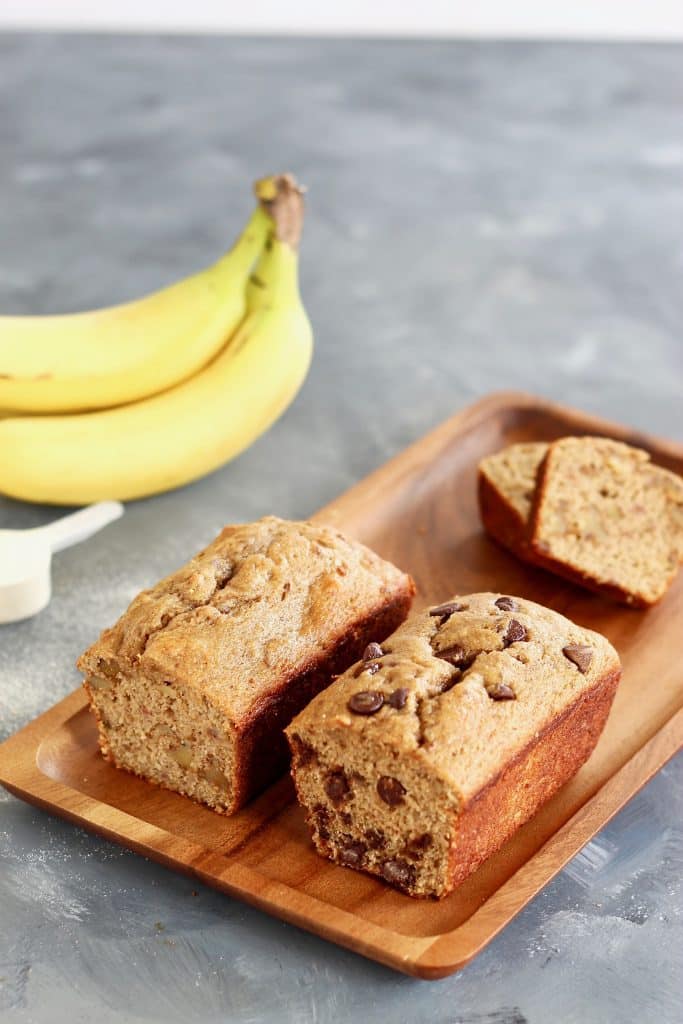
Throughout the week, I had pretty strong cravings for my typical small dessert after dinner or Quinoa Crunch Granola over my morning yogurt. At one point during the week, I literally smelled my chocolate bar just to sadly put it back in the pantry. Talk about will power, man! Luckily, I was able to get my sweet tooth fix from recipes like my sugar-free Protein-Packed Banana Bread and Peanut Butter and Berry Jam Overnight Oatmeal.

If you’re thinking about trying out the No Sugar Added Diet, read this article with diet thoughts and takeaways before you start. Ultimately, the idea of intuitive eating and a balanced diet might be better.
Protein-Packed Collagen Banana Bread naturally sweetened from bananas and dates

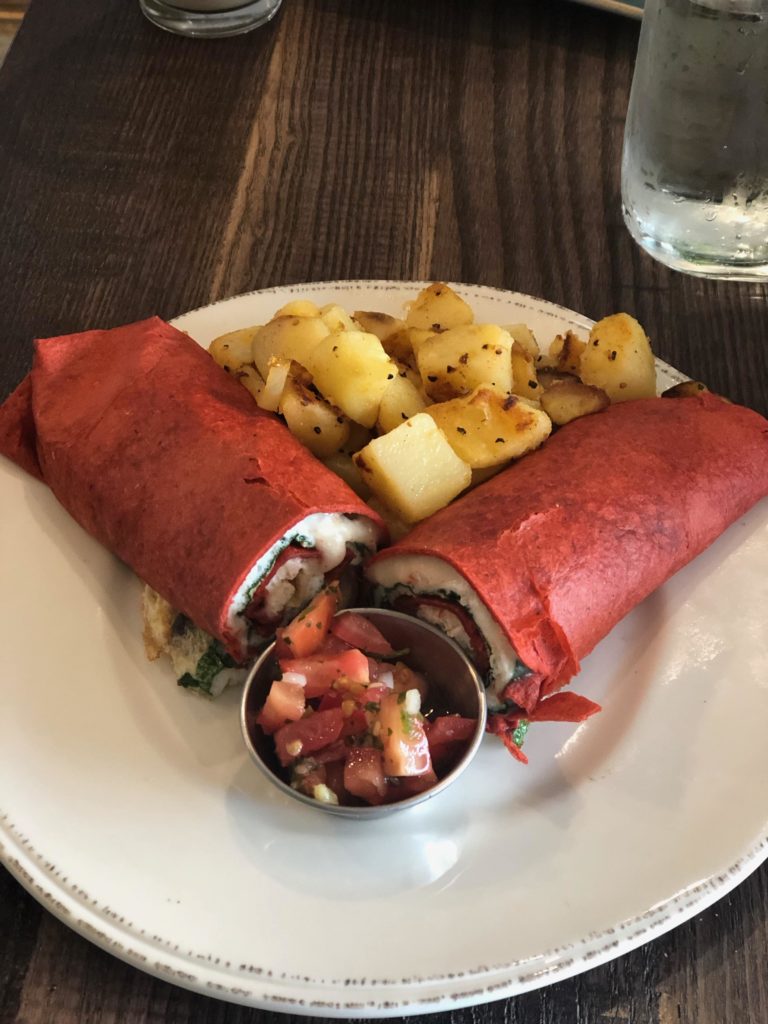
Eating out was tricky. I got brunch with a friend at a restaurant with enticing options like pancakes, waffles, and french toast. Instead, I opted for the turkey and egg white wrap. It was good, but did not fully satisfy my true craving.

If you’re thinking about trying out the No Sugar Added Diet, read this article with diet thoughts and takeaways before you start. Ultimately, the idea of intuitive eating and a balanced diet might be better.

This is where the idea of the diet falls off for me. In my daily diet, I always go back to my nutrition philosophy of intuitive eating. We should listen to our body and eat with the mindset of balance. Sometimes this means satisfying our cravings and realizing that a little bit of added sugar, within reason, will likely not be detrimental.

In fact, having a healthy relationship with food in this way is so important for maintaining a healthy body and mind. Not to mention-this balance is important so you don't miss out on the sweet enjoyments in life.

For example, I strive to eat healthy on a routine basis but if I'm craving a nutella-filled crepe on the brunch menu or want to snag a homemade cookie brought in by a co-worker-I feel the freedom to go for it! Ultimately, food is our nourishment but it's also a huge part of enjoying life. Choose both nourishment and joy.

If you’re thinking about trying out the No Sugar Added Diet, read this article with diet thoughts and takeaways before you start. Ultimately, the idea of intuitive eating and a balanced diet might be better.

Takeaways

Like most all diets, the No Added Sugar Diet has both pros and cons.

Pros: Added sugars can definitely afford to be decreased in our society. Too much of them in the diet can be linked to serious diseases such as diabetes, heart disease and liver disease. By cutting out sugar, there is more emphasis on consuming nutrient-dense foods like fruits and vegetables as well as eating less processed foods.

Cons: This diet promotes the idea of elimination of all items containing added sugar, rather than focusing on a balanced diet filled with whole grains, fruits, vegetables, nuts and seeds, low-fat dairy, and lean protein. Individuals should be cautious of elimination diets (unless prescribed by a doctor or registered dietitian nutritionist) as in turn, this can lead to a negative relationship with food. The diet may also cause effects like irritability, cravings, and headaches.

Main Takeaways: The No Sugar Added Diet may be beneficial for individuals looking to decrease sugar to try for a short time period to bring awareness to sources of added sugar in their diet. However, this diet can be pretty restrictive long-term. Instead, a mindset of balance and moderation can promote a healthy body and a healthy relationship with food.

Looking to be more mindful of added sugar in your diet? Check out some of my sugar free recipe options here!

If you’re thinking about trying out the No Sugar Added Diet, read this article with diet thoughts and takeaways before you start. Ultimately, the idea of intuitive eating and a balanced diet might be better.

Spring Vegetable and Flank Steak Stir Fry

April 9, 2019 by Mackenzie Burgess, RDN 1 Comment

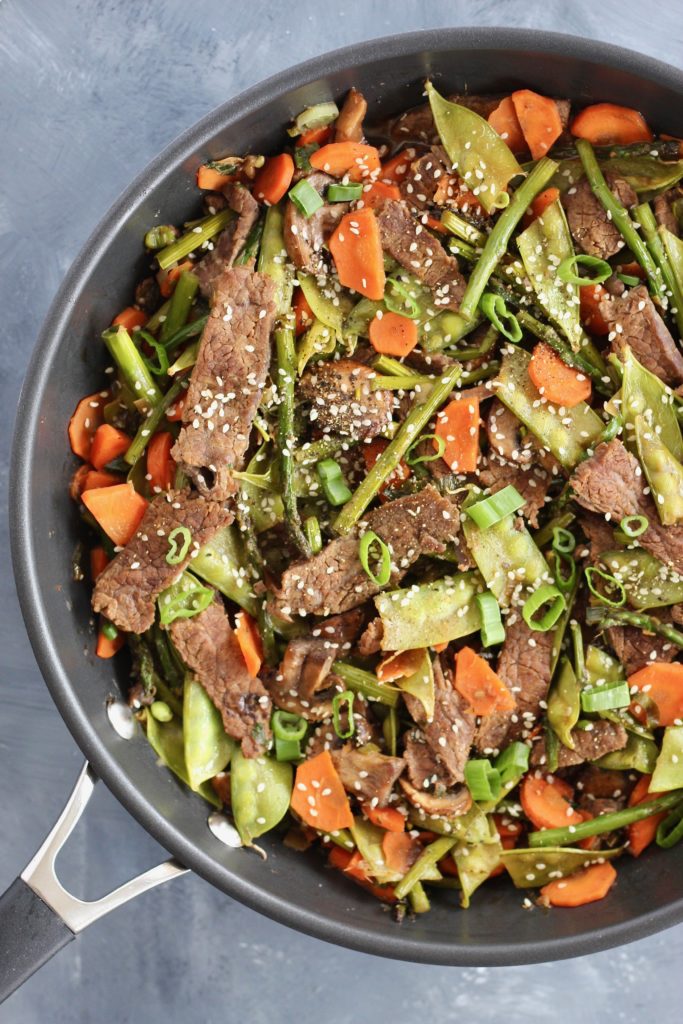
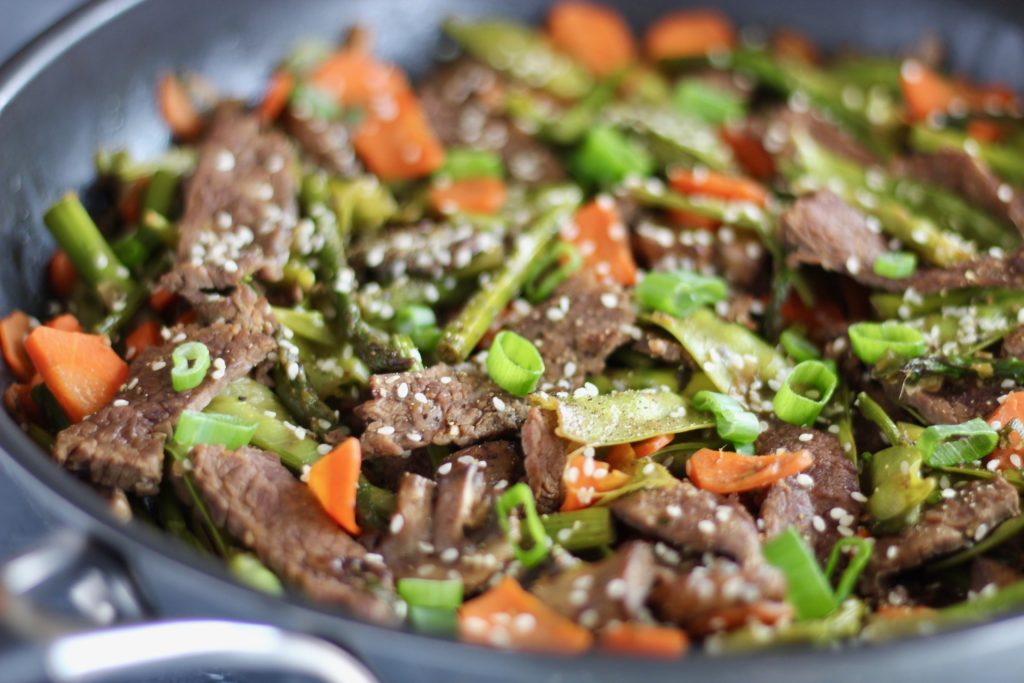
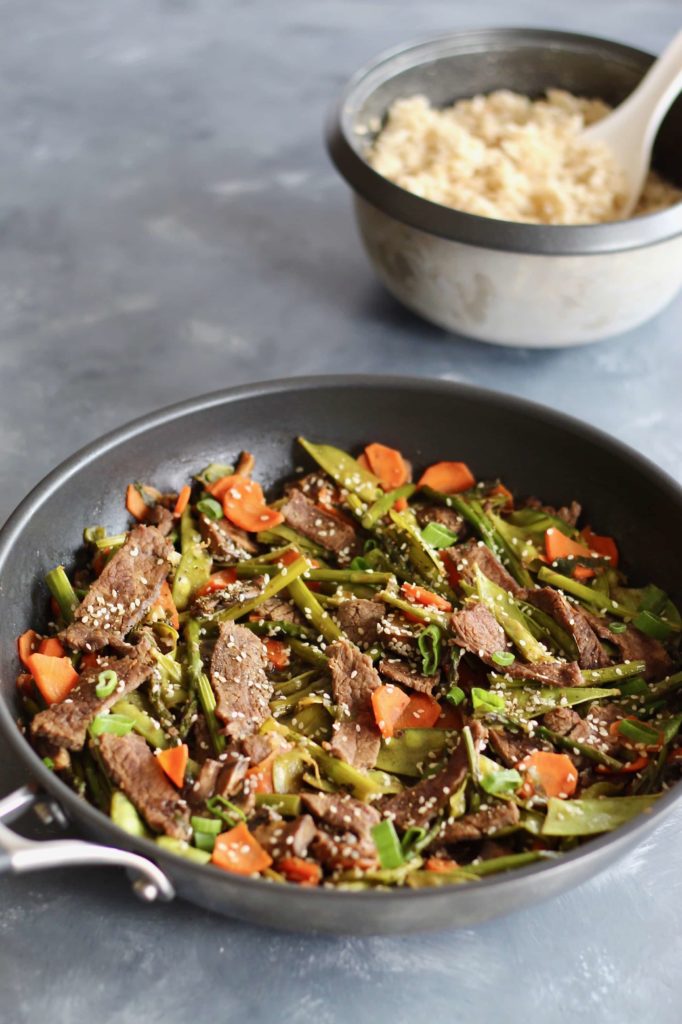
Spring means more produce is coming into season. Scallions, peas, carrots, garlic, asparagus-all the good stuff. Incorporate these seasonal ingredients into this super quick flank steak stir fry.

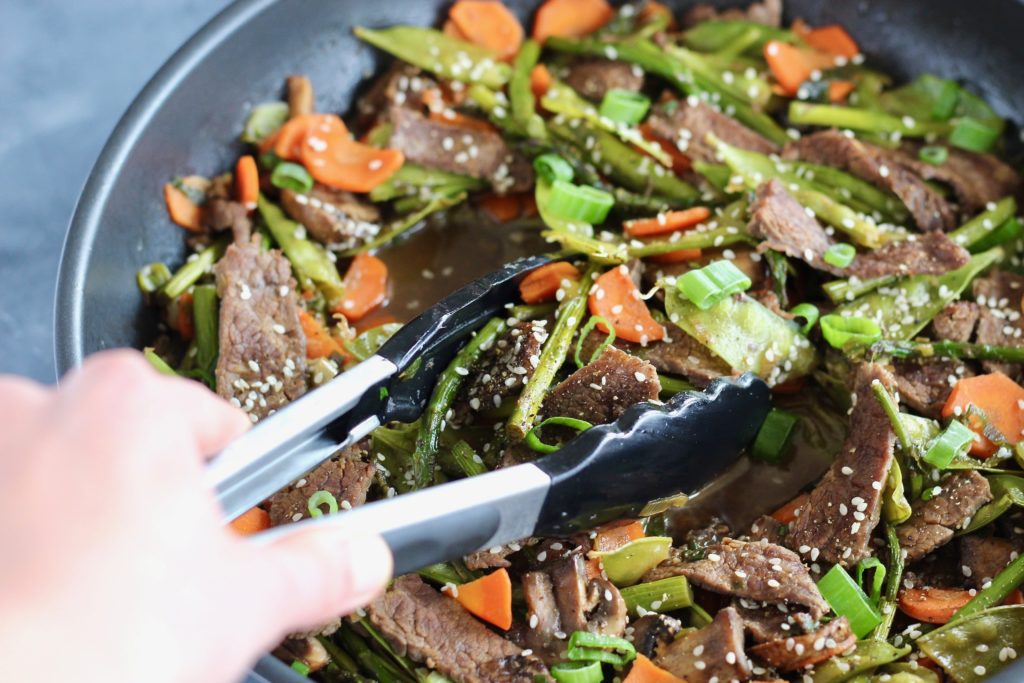
Incorporate seasonal ingredients like carrots, peas, and asparagus into this super quick Vegetable and Flank Steak Stir Fry. A perfect protein and veggie-packed recipe to whip up for your next meal.

Disclosure: This post may contain affiliate links, meaning I earn a small commission if you make a purchase through one of my links-at no extra cost to you. As always, all opinions are my own. Thanks so much for your support! See my disclosure policy for more details.

How do you make a stir fry?

First, let's talk technique. Although the idea of a stir fry is quite simple, there are certain tricks to keep in mind in order to perfect this dish.

Start with everything prepped and ready to go

"Mise en place" is a French term for having everything in place before cooking. This is crucial because the process of stir frying typically takes less than 10 minutes, so you don't want to be scrambling to cut up more vegetables as something is cooking. Have your cooked grains, prepared veggies, sliced meats, oils, and sauces out and ready before you even heat up the pan.

How hot should the pan be?

When you heat the pan or wok, you want it to be piping hot so that when you drop water on it, it immediately skitters around the pan. Since the pan is going to be very hot (likely around 375 degrees or higher) you want to pick an oil that has a high smoke point like a light olive oil, canola oil, or other high heat oil. Read this guide for more information about cooking with oils.

Incorporate seasonal ingredients like carrots, peas, and asparagus into this super quick Vegetable and Flank Steak Stir Fry. A perfect protein and veggie-packed recipe to whip up for your next meal.

Is flank steak healthy?

Flank steak is typically consider a better-for-you cut of beef because it's super lean without much extra fat. It's also a more affordable cut. Since it contains less fat, it's even more important to avoid overcooking as it can dry out quickly. Another important tip is to salt your meat prior to cooking it. This allows water to come to the surface of the meat and concentrate the flavor more.

Incorporate seasonal ingredients like carrots, peas, and asparagus into this super quick Vegetable and Flank Steak Stir Fry. A perfect protein and veggie-packed recipe to whip up for your next meal.

What nutrients are found in beef?

Although red meat gets a bad rap, lean cuts of red meat are still an important part of a balanced diet as they provide substantial protein, iron, zinc, and vitamin B12. The American Institute for Cancer Research suggests that to reduce cancer risk, people should "eat no more than 18 oz (cooked weight) per week of red meat.

Aim to vary your protein sources and focus on eating other lean proteins like chicken breast, seafood, beans, dairy, and nuts. If you're not about the red meat or are vegetarian or vegan, you can swap out the steak for 8 ounces of mushrooms, chicken, tempeh, or tofu instead.

Incorporate seasonal ingredients like carrots, peas, and asparagus into this super quick Vegetable and Flank Steak Stir Fry. A perfect protein and veggie-packed recipe to whip up for your next meal.

What vegetables do you use for this stir fry?

For this spring-inspired stir fry, we are using a combination of seasonal asparagus, carrots, snap peas, and mushrooms.

Try using this same stir fry recipe throughout the year and simply swapping out the veggies for whatever is currently seasonal. As a rule of thumb, aim to prep about 6-8 cups of veggies.

  • For summer try: bell peppers, zucchini, and summer squash.
  • For fall try: broccoli, different varieties of mushrooms, and sweet potatoes.
  • For winter try: cabbage, brussels sprouts, and kale.

This recipe was both developed with the help of Chef Keilen Shigematsu, owner of Table Focus Catering. He is always great at teaching me the importance of technique in cooking!

Turn the heat up and get ready to make this 10 minute meal! What are your favorite veggies to use when you stir fry?

Incorporate seasonal ingredients like carrots, peas, and asparagus into this super quick Vegetable and Flank Steak Stir Fry. A perfect protein and veggie-packed recipe to whip up for your next meal.
Spring Vegetable and Flank Steak Stir Fry 6 scaled
Print Recipe
4.17 from 6 votes

Spring Vegetable and Flank Steak Stir Fry

Incorporate seasonal ingredients like carrots, peas, and asparagus into this super quick Vegetable and Flank Steak Stir Fry. A perfect protein and veggie-packed recipe to whip up for your next meal. 
Prep Time10 minutes mins
Cook Time10 minutes mins
Total Time20 minutes mins
Course: Main Dish Choices
Cuisine: Asian
Keyword: one pan, seasonal, steak, stir fry, vegetables
Servings: 4
Author: Mackenzie Burgess, RDN

Equipment

  • Low Sodium Soy Sauce
  • Rice Vinegar
  • Sesame Oil

Ingredients

  • 2 tablespoons high heat oil of your choice
  • 2 cloves garlic, grated
  • 2 tablespoon fresh ginger, grated
  • ½ cup green onions, chopped, plus more to garnish
  • ½ pound flank steak, cut in half and thinly sliced against the grain
  • ½ bunch asparagus, trimmed and cut into 1 ½ inch pieces
  • 2 small carrots, thinly sliced into coins (about 1 cup)
  • 2 cups snap peas or snow peas, cut diagonal in half
  • 4 ounces shiitake, crimini or oyster mushrooms, (about 2 cups)
  • ¼ cup low sodium soy sauce (or tamari if gluten-free)
  • 1 tablespoon rice vinegar, plus another tablespoon reserved for the end
  • 1 ½ teaspoons black pepper
  • 1 tablespoon sesame seeds, to garnish
  • 1 teaspoon sesame oil
  • 2 cups cooked grains or noodles of your choice (brown rice, quinoa, rice noodles, etc)
instacartGet Recipe Ingredients

Instructions

  • Season thinly sliced steak with salt and let sit for up to 1 hour before cooking to bring moisture to surface of the meat. Dab dry with a paper towel.* Meanwhile, prepare all other ingredients, have your oils and sauces out, and have your grain or noodles cooked, as the stir fry cooks very quickly.
  • When everything is prepped, heat a large skillet or wok to high heat. Ensure it is piping hot before adding oil.
  • Once hot, add oil, garlic, ginger, and green onions into the pan and stir fry until fragrant, about 2 minutes.
  • Add steak into hot skillet and cook until it is just lightly browned on most sides, about 1-2 minutes.
  • Add vegetables into the same skillet and cook for 2 minutes. Add in soy sauce and rice vinegar and cook for 3 more minutes until slightly reduced.
  • Sprinkle with extra green onions, black pepper, and sesame seeds. Drizzle another tablespoon of rice vinegar** and a teaspoon of sesame oil over the top. Serve over hot cooked grain or noodles of choice, if desired.

Notes

*This technique allows the water to be drawn out of the meat and concentrate the flavor more. If you are running short on time, simply salt the meat before adding into your hot skillet.
**The acidity of the rice vinegar helps to bring out the flavor without adding extra salt. If you still are finding it needs to be seasoned more, salt to taste.

save this spring stir fry recipe on pinterest:

Incorporate seasonal ingredients like carrots, peas, and asparagus into this super quick Vegetable and Flank Steak Stir Fry. A perfect protein and veggie-packed recipe to whip up for your next meal.

Mexican Quinoa Stuffed Peppers

March 24, 2019 by Mackenzie Burgess, RDN Leave a Comment

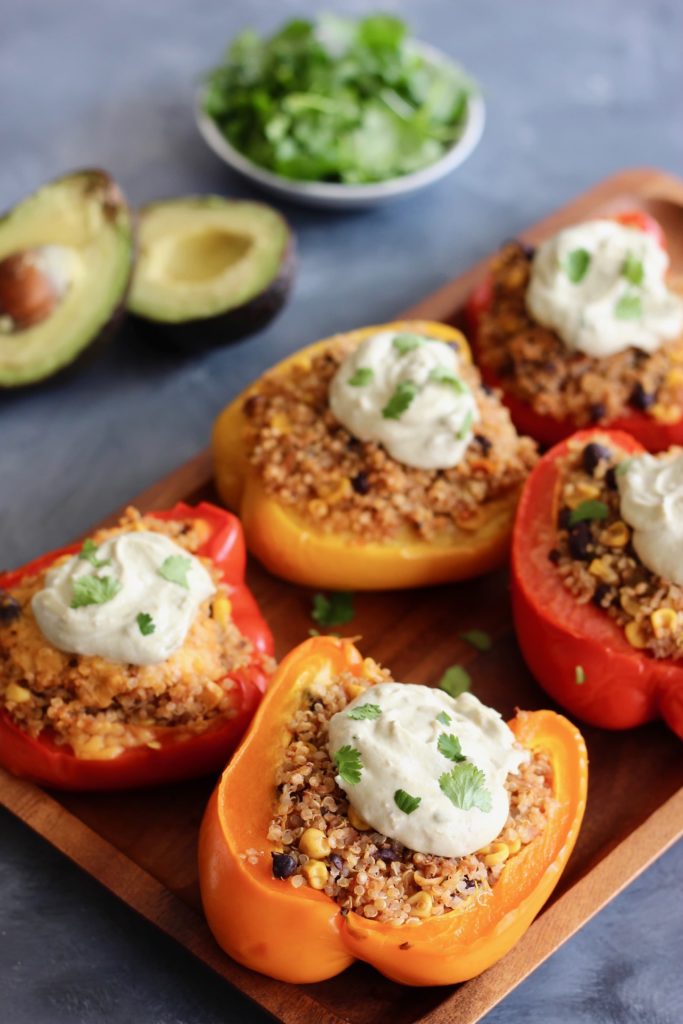
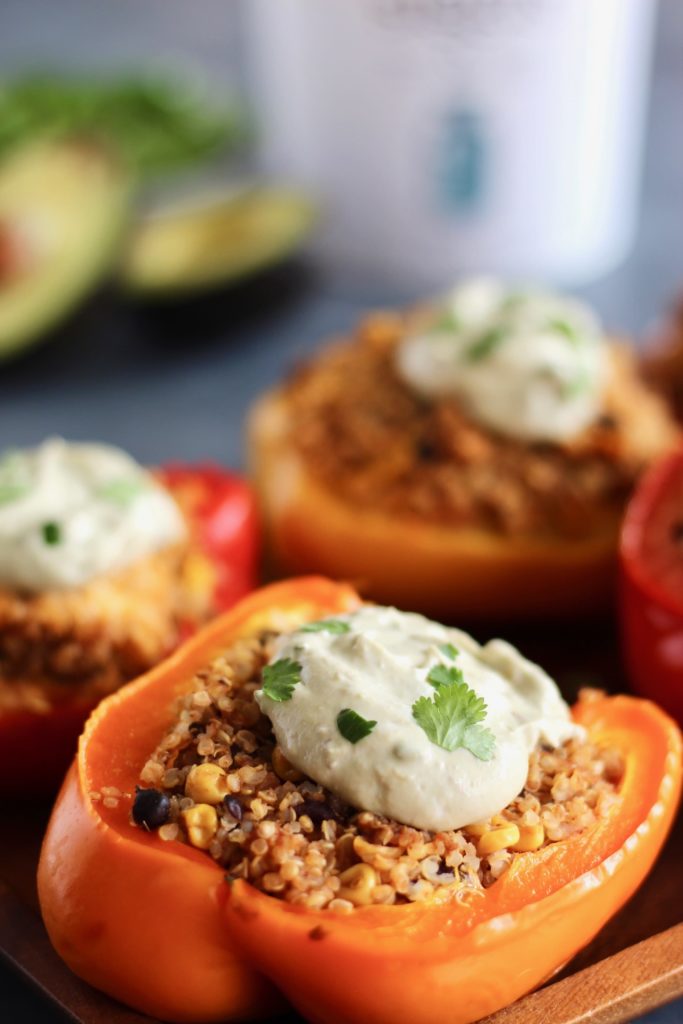
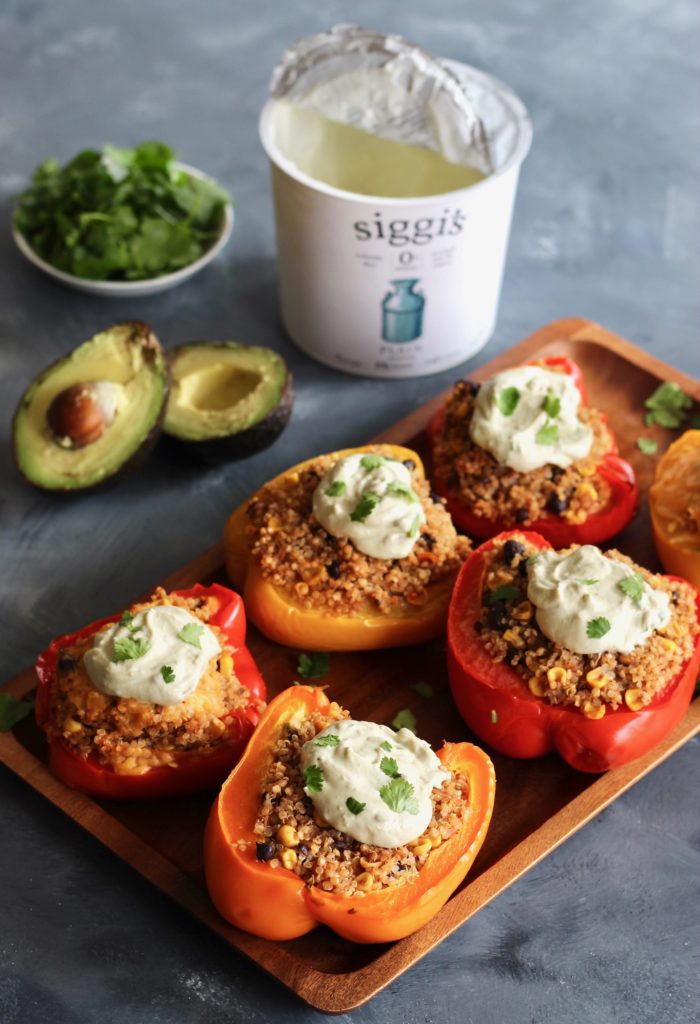
Serve up these Quinoa Stuffed Peppers in just one hour. Filled with all ingredients you likely already have on hand like salsa, canned beans, and fresh spices! Serve with a creamy yogurt avocado sauce on top. Vegan options are included too.

Serve up these Mexican Quinoa Stuffed Peppers filled with salsa, canned beans, and fresh spices (ingredients you likely already have on hand) in just one hour!

How do you make Mexican Quinoa Stuffed Peppers? Can you make it ahead of time?

Stuffed peppers have been my go-to meal lately. It's so easy to whip up the filling, throw them in the oven, and have a satisfying meal ready in an hour. These Mexican Quinoa Stuffed Peppers have been one of my favorites to prepare, especially because they are so easy to prep in advance.

Have your halved peppers ready to go and combine all the filling ingredients aside from the quinoa and vegetable broth in a bowl. It also helps to have the yogurt avocado sauce already made.

Then, later when you are ready to make the meal, simply cook the quinoa, pour in your filling ingredients, and spoon this into your prepared peppers to bake.

Serve up these Mexican Quinoa Stuffed Peppers filled with salsa, canned beans, and fresh spices (ingredients you likely already have on hand) in just one hour!

What can yogurt be used for?

The thing that truly makes this recipe for me is the Creamy Yogurt Avocado Sauce on top. Yogurt isn't limited to just breakfast recipes like overnight oats or crunchy granola and yogurt. I love to go savory and substitute plain yogurt for sour cream in recipes to cut out the saturated fat and pack in the protein. This creamy sauce is also amazing to serve as a party dip, spread over tacos, or dip quesadillas in.

My favorite yogurt to use in this sauce is Siggi's 0% Plain skyr yogurt. I love the mission behind Siggi's as they are all about simple ingredients and limited added sugars. Just one 5.3 oz container of this yogurt has an impressive 16 grams of protein and just 7 grams of naturally occurring sugar coming from the lactose found in milk. With other simple, nutritious ingredients like avocados, fresh produce, and flavorful spices-this recipe contains no added sugar! However, you can also use any plain Greek yogurt you like best.

Serve up these Mexican Quinoa Stuffed Peppers filled with salsa, canned beans, and fresh spices (ingredients you likely already have on hand) in just one hour!

What bell peppers should I use?

You can use red, yellow, or orange peppers for this recipe. You can use green bell peppers too, they are just a little bit more bitter. Try using a variety of sweet bell peppers for beautiful, colorful presentation. As a bonus, these different colors represent different vitamins and minerals which keep us healthy.

What are some of your favorite fillings for delicious stuffed peppers?

Mexican Quinoa Stuffed Peppers with Creamy Yogurt Avocado Sauce 4 scaled
Print Recipe
5 from 1 vote

Mexican Quinoa Stuffed Peppers with Yogurt Avocado Sauce

Serve up these Mexican Quinoa Stuffed Peppers filled with salsa, canned beans, and fresh spices (ingredients you likely already have on hand) in just one hour! 
Prep Time10 minutes mins
Cook Time1 hour hr
Total Time1 hour hr 10 minutes mins
Cuisine: Mexican
Keyword: healthy, protein, quinoa, stuffed peppers, vegetables, vegetarian, yogurt
Servings: 6
Author: Mackenzie Burgess, RDN

Equipment

  • Pre-rinsed Quinoa
  • Salsa
  • Black Beans

Ingredients

Peppers Ingredients:

  • 6 sweet bell peppers of your choice halved and seeds removed (red, yellow, or orange peppers)
  • 1 ½ cup quinoa, uncooked
  • 3 cups vegetable broth
  • 1 cup salsa or chopped tomatoes
  • 1 can corn
  • 1 can black beans
  • ½ lime, juiced
  • 1 tablespoon cumin
  • 2 teaspoon chili powder
  • 1 teaspoon garlic powder
  • ½ teaspoon onion powder
  • ½ cup shredded cheddar cheese
  • Lime wedges, optional
  • Cilantro, optional

Yogurt Avocado Sauce:

  • 2 ripe avocados, pit removed
  • ½ cup Siggi's 0% Plain skyr yogurt or plain Greek yogurt
  • 2 tablespoons cilantro, finely chopped
  • ½ lime, juiced
  • Salt and pepper, to taste
instacartGet Recipe Ingredients

Instructions

  • Preheat oven to 375 degrees.
  • Combine dry quinoa and vegetable broth in a medium sized pot and bring to a boil. Cover and simmer for 15 minutes or until vegetable broth is absorbed.
  • Meanwhile, place pepper halves into a large glass dish or baking sheet.
  • To make sauce, combine avocado, yogurt, and cilantro in a small dish and set aside.
  • Once quinoa is finished cooking, add salsa, corn, black beans, lime juice, cumin, chili powder, garlic powder, and onion powder into the quinoa and stir to combine. Spoon quinoa mixture into halved peppers and top with shredded cheese if desired.
  • Cover with foil and bake for 45 minutes or until peppers are slightly softened. Serve hot and top with yogurt avocado sauce, lime wedges, and cilantro. Store any leftover peppers and sauce in the fridge for up to 3 days.

Notes

If you are vegan, serve without cheese or yogurt sauce.

save this mexican quinoa stuffed peppers recipe on pinterest:

Serve up these Mexican Quinoa Stuffed Peppers filled with salsa, canned beans, and fresh spices (ingredients you likely already have on hand) in just one hour!

Intuitive Eating

March 22, 2019 by Mackenzie Burgess, RDN Leave a Comment

We live in a nation obsessed with physical appearance, weight loss, and dieting. $33 billion dollars are spent on dieting products each year, yet over two-thirds of American adults are overweight or obese. These dieting patterns are a huge issue because they are typically unsuccessful, physically and emotionally damaging, and ultimately promote unhealthy eating behaviors. I believe it's time to give up dieting, strict rules, and instead, start listening to our bodies. It's time for Intuitive Eating.

What is Intuitive Eating?

Intuitive Eating an approach where you allow yourself unconditional permission to eat with attunement, you rely on your own sense of hunger and satiety cues, and in the end, your body will come to its natural biological weight. As a dietitian-this approach of Intuitive Eating is one that I have found I live by and want others to live by as well. Let me tell you a little bit more about some of its guiding principles.

Ditch the Diets

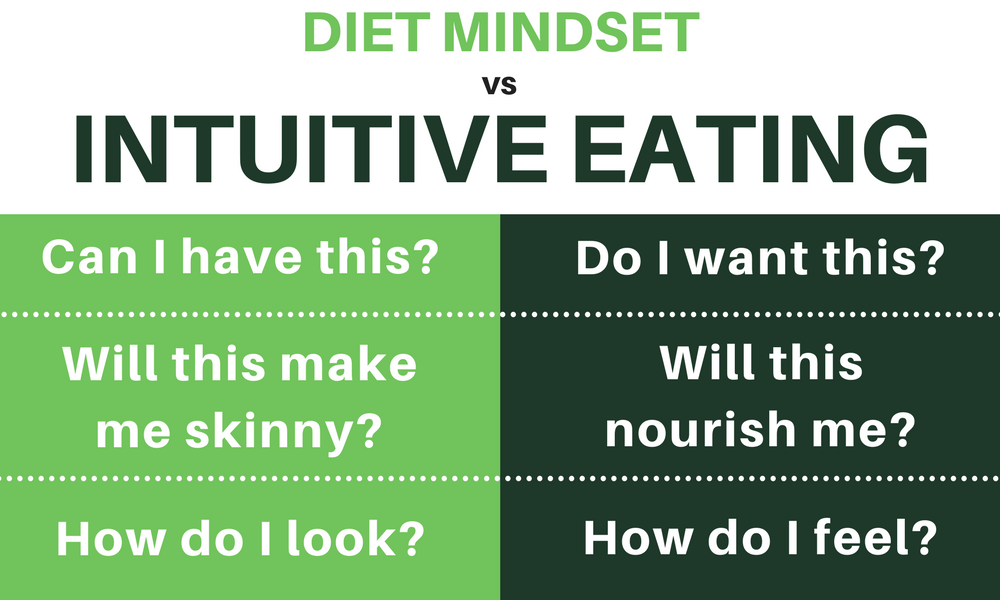
Dieters are so focused on the question, "Will this make me skinny?" whereas instead the question should be, "Will this nourish me?"

Intuitive Eating is a nutrition philosophy is all about ditching the diet mentality and listening to your body. Learn more about its guiding principles here.

Paleo. Keto. Whole 30. You name it. Fads diets are everywhere and new ones are popping up all the time. These are called "fad" diets for a reason because they don't last and weight continually fluctuates back and forth. In fact, several studies have shown that the majority of people on fad diets regain their weight back, plus more.

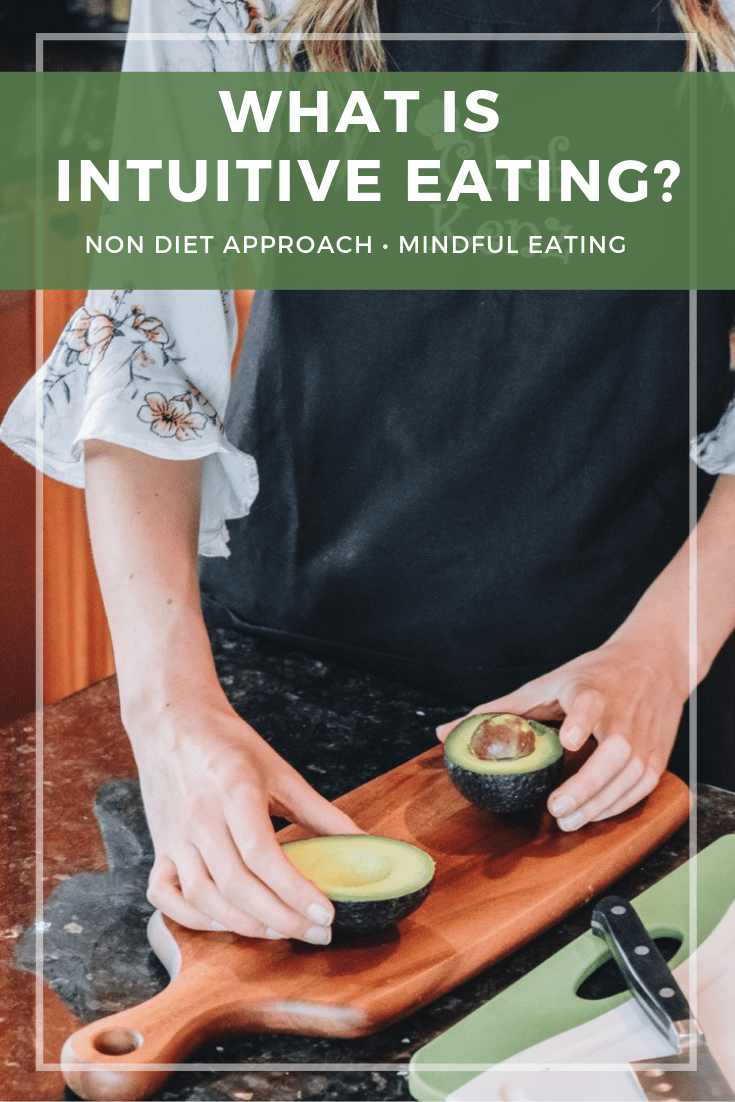
The first concept of intuitive eating is to completely ditch these diets. That means no more embracing the books, commercials, and gimmicks that promise a quick way to lose weight. With intuitive eating, it is more about a lifestyle change that promotes bringing you to your body's natural weight. This approach has a completely different outlook regarding food. Take a look at the picture above. With a diet mindset, you might say, "Can I have this food?" vs "Do I want this food?" Or those on a diet might say, "I exercise so I can eat" vs "I eat so I can have energy to exercise." Finally, dieters are so focused on the question, "Will this make me skinny?" whereas instead the question should be, "Will this nourish me?"

And in regards to health effects, switching to this perspective of intuitive eating has been associated with both lower BMI and better psychological health. Check and check.

Rediscover Satisfaction

When we allow ourselves to have flexibility rather than restriction, we can start to realize what foods we actually enjoy.

Intuitive Eating is a nutrition philosophy is all about ditching the diet mentality and listening to your body. Learn more about its guiding principles here.

Another issue with diets is there a constant "food police" in dieters heads. This voice tells you that you're "good" for eating minimal calories or "bad" because you ate a piece of chocolate cake. The food police monitor the unreasonable rules that dieting has created. With these strict rules, dieters are often unable to be truly satisfied at the end of their meal. There is huge difference between being full and being satisfied. For example, you can choose to eat that one salad option on the menu that your diet restricts you to instead of getting the sandwich that you really wanted... but at the end of the meal you are not going to be satisfied if you were really craving the sandwich.

By adopting intuitive eating rather than a diet, you are able to start to challenge the voices of the food police in your head and have a guilt-free experience with food choices. When we allow ourselves to have this flexibility rather than restriction, we can start to realize what foods we actually enjoy and stop the cycle of restriction and binging.

Honor Your Hunger and Fullness

Intuitive Eating is a nutrition philosophy is all about ditching the diet mentality and listening to your body. Learn more about its guiding principles here.

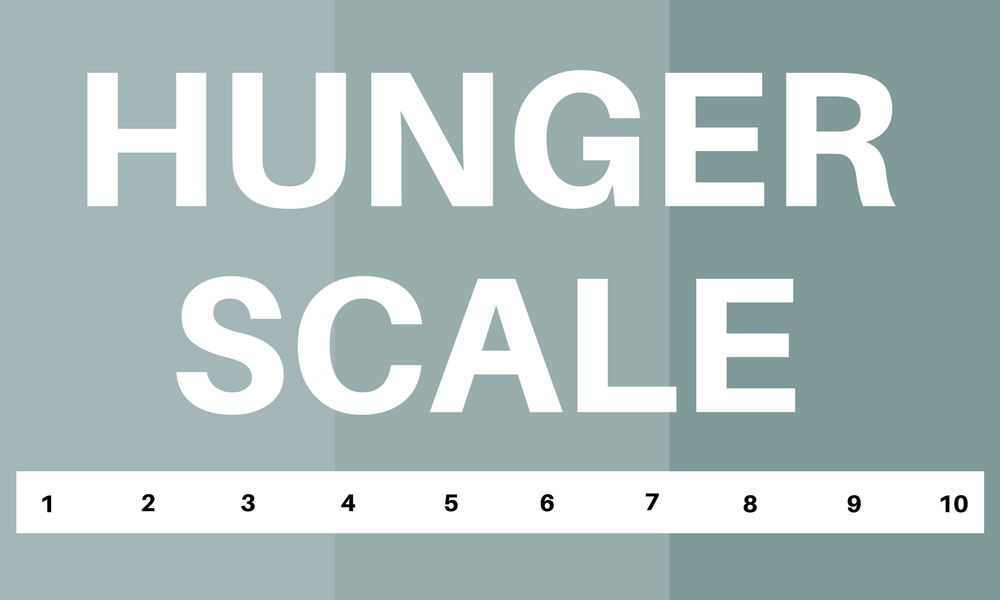
Everyone is born with an innate sense of hunger. Our hunger may be described in a 1 to 10 scale. 1 being starved and 10 being Thanksgiving dinner stuffed. The goal is to keep our bodies in a range from 3-8. When we start to drop lower on the scale, our hunger signals may start to show. These hunger signals vary for everyone-for some it may be a growling stomach and headaches or for others, they may be feeling irritable or what I like to call HANGRY. With dieting, these natural hunger cues are typically suppressed or ignored. In turn, this can trigger a primal drive to overeat. And once you reach the moment of excessive hunger often experienced with dieting, all intentions of moderate, conscious eating go out the window. And so does this internal hunger scale. Most dieters at this point of overeating will shoot their fullness to a whopping 10 before they can even realize their stuffed to the point that they feel sick.

The intuitive eating approach fixes this issue by instead adopting the concept of listening to your body to tell you when you are hungry and when you are comfortably full. A practical way this looks is intuitive eaters will pause in the middle of a meal or snack and ask themselves: "What is your current fullness level?" This way they are able to mindfully maintain themselves within the comfortable 3-8 range.

Honor Your Health and Nutrition

Remember that you don't have to eat a perfect diet to be healthy. It's what you eat consistently over time that matters.

Intuitive Eating is a nutrition philosophy is all about ditching the diet mentality and listening to your body. Learn more about its guiding principles here.

Dieting is a hard thing in my field of study because there is a fine line between nutrition and dieting in our culture. With diets, there is often a negative relationship with nutrition as it becomes a concept of confusing rules, deprivation, and no real enjoyment.

With intuitive eating, the idea is that nutrition should be taken back to the very basics that are just simply universal truths. We should drink plenty of water. We should eat plenty of fibrous foods including vegetables, fruits, beans, lentils, and whole grains more often. And we should eat a variety of foods. Intuitive Eating says nutrition should gently guide your choices but your intuition, cravings and satisfaction also determine what you eat.

For example, where dieters might eat raw broccoli for a diet that tastes like dirt to them, intuitive eaters make food choices that honor their health and taste buds. Where dieting might say you have to be perfect with every aspect of nutrition, Intuitive Eating says: "Remember that you don't have to eat a perfect diet to be healthy. You will not suddenly get a nutrient deficiency or gain weight from one snack, one meal, or one day of eating. It's what you eat consistently over time that matters".

Main Takeaways

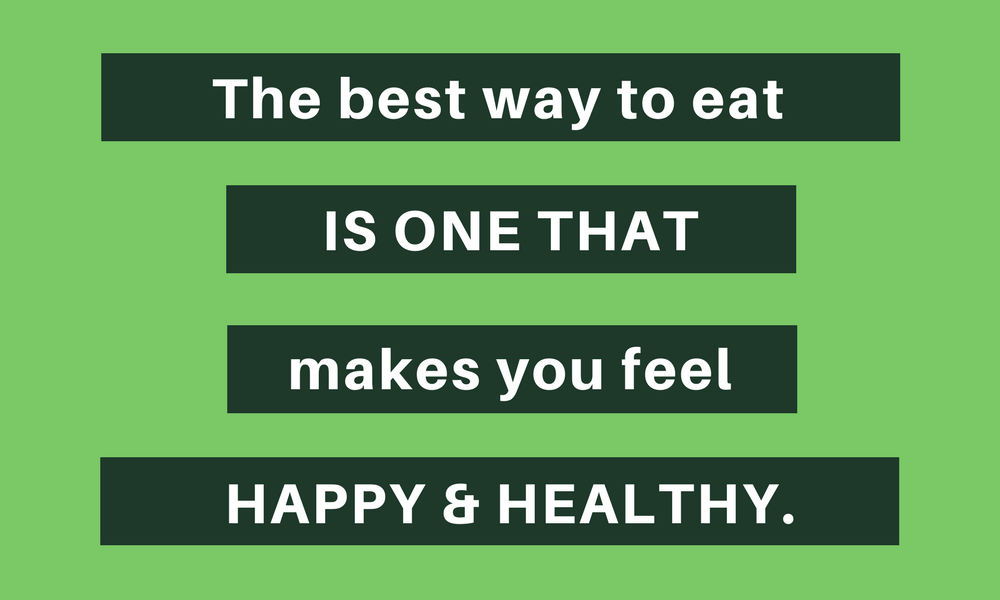
At the end of the day, I believe it all comes back to making sustainable, satisfying, and cheerful food choices (hence my blog name!) It's time to stop the dieting. The obsession with weight loss and the idolized, societal appearance. The voices controlling your food choices. And the destructive relationship with nutrition. I believe Intuitive Eating it is the fix to a happier and healthier nation.

I am very passionate about this topic and welcome any questions about intuitive eating, nutrition, or just general health! If you would like to learn more about the concept of intuitive eating, check out the book "Intuitive Eating" by Elyse Resch and Evelyn Tribole. What are your thoughts on Intuitive Eating?

Intuitive Eating is a nutrition philosophy is all about ditching the diet mentality and listening to your body. Learn more about its guiding principles here.

Roasted Tomato Basil Soup

March 10, 2019 by Mackenzie Burgess, RDN 2 Comments

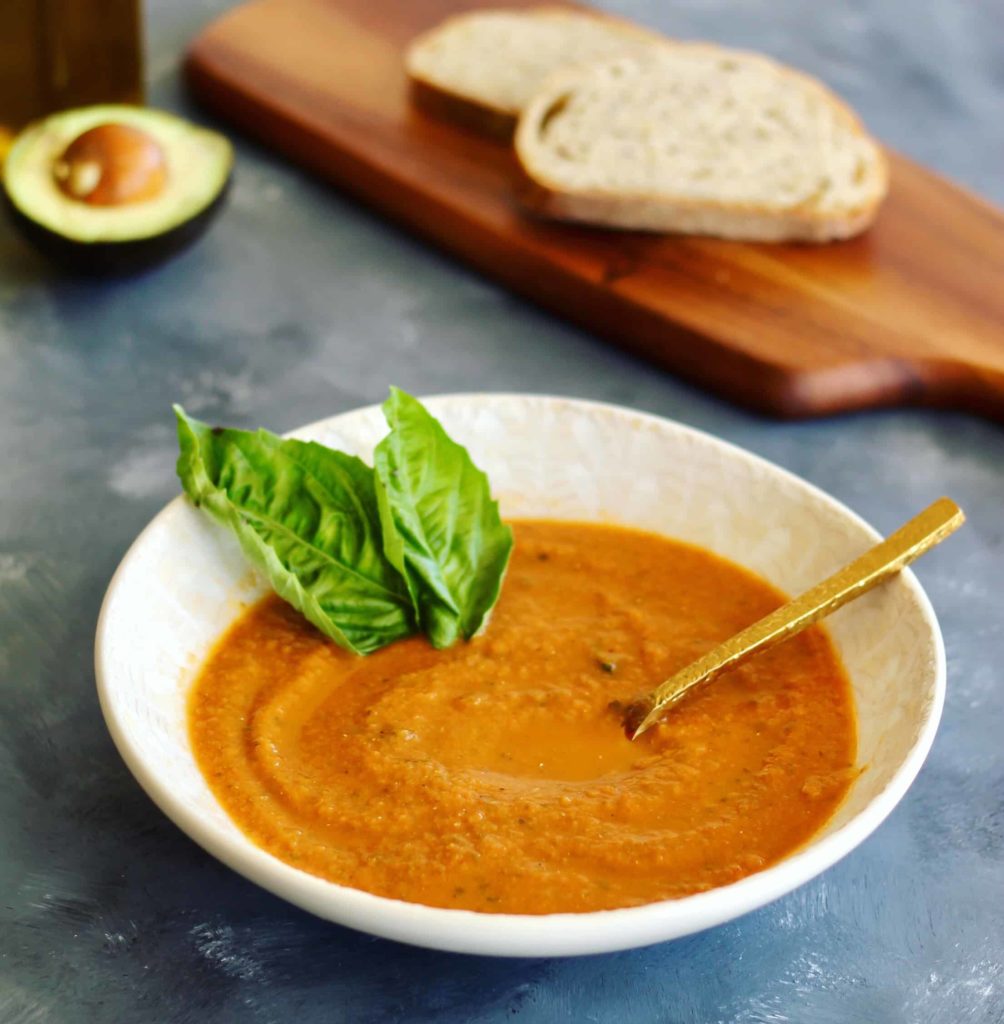
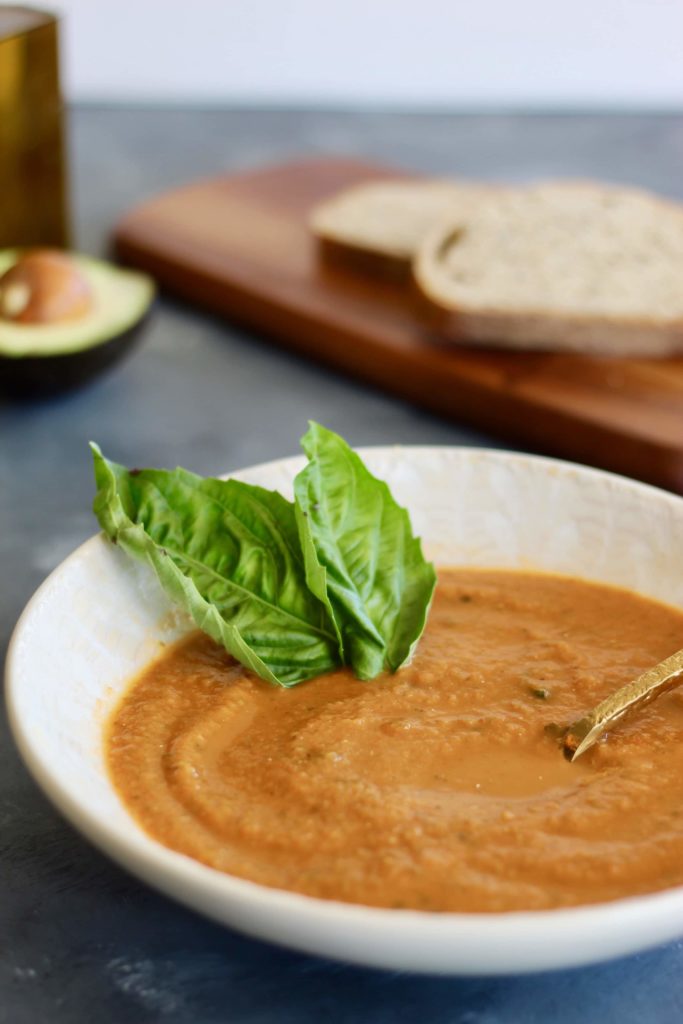
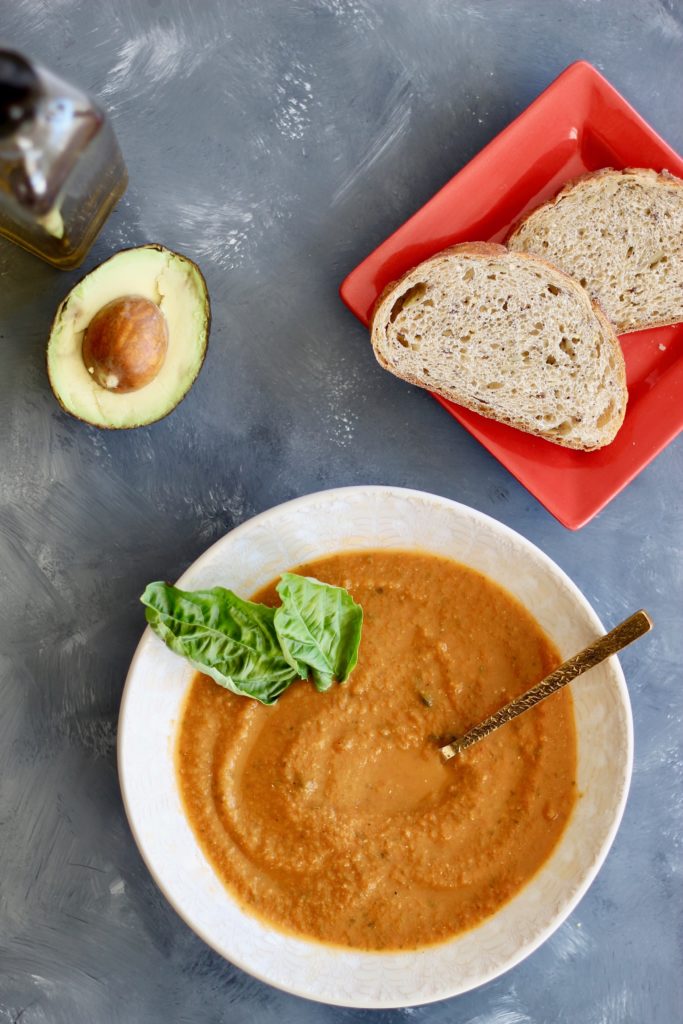
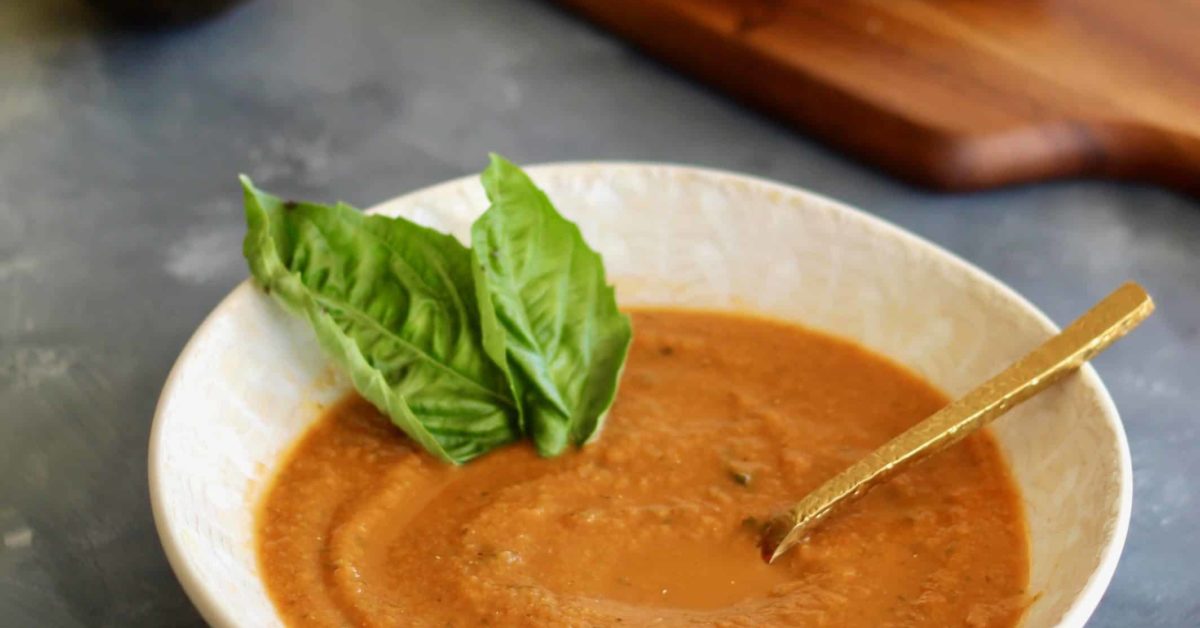
This roasted tomato basil soup calls for tomatoes of your choice so you can use your favorite tomato variety or throw in any canned whole tomatoes you have on hand. Serve with avocado slices, nutritional yeast, and whole grain bread if desired. #tomatoes #vegansoup #comfort food #CheerfulChoices

Sometimes the most comforting thing on a cold day is a delicious bowl of soup, especially when it's this homemade Roasted Tomato Basil Soup! I even love soup in the summertime because it's a great way to utilize fresh produce in an easy way.

This roasted tomato basil soup calls for tomatoes of your choice so you can use your favorite tomato variety or throw in any canned whole tomatoes you have on hand. Serve with avocado slices, nutritional yeast, and whole grain bread if desired. #tomatoes #vegansoup #comfort food #CheerfulChoices

This recipe is great because it works for all seasons. You can find luscious tomatoes of various varieties at your local farmers market from the months of May to October. If it's winter and you can't find any good tomatoes at the store, opt for canned whole peeled tomatoes. I often use these instead of fresh tomatoes because they can be cheaper and juicier. Tomatoes are a great source of the antioxidant, lycopene, which can be protective against heart disease and cancer. They are also a great source of vitamin C, vitamin A and potassium.

This roasted tomato basil soup calls for tomatoes of your choice so you can use your favorite tomato variety or throw in any canned whole tomatoes you have on hand. Serve with avocado slices, nutritional yeast, and whole grain bread if desired. #tomatoes #vegansoup #comfort food #CheerfulChoices

The funny thing is I used to HATE tomatoes. I would be that person who would pick the tomatoes off my salad, immediately write off anything with tomatoes on a menu and despise any tomato-based soup. I don't know what happened with my taste buds, but I'm happy to say I'm a changed woman and love tomatoes now!

This roasted tomato basil soup calls for tomatoes of your choice so you can use your favorite tomato variety or throw in any canned whole tomatoes you have on hand. Serve with avocado slices, nutritional yeast, and whole grain bread if desired. #tomatoes #vegansoup #comfort food #CheerfulChoices

This soup goes great with fresh avocado slices, parmesan cheese sprinkled over top, and a hearty, toasted, whole grain bread (or better yet-grilled cheese!) on the side. Let me know if you have any favorite additional toppings you like to throw over this soup!

Roasted Tomato Basil Soup scaled
Print Recipe
Be the first to rate this recipe!

Roasted Tomato Basil Soup

This homemade Tomato Basil Soup is juicy, flavorful, and simple to blend up. The perfect soup recipe to enjoy with seasonal or canned tomatoes! Serve with avocados, parmesan cheese, and whole grain bread.
Cook Time1 hour hr
Total Time1 hour hr
Course: Recipes
Keyword: healthy, sheet pan, soup, tomato soup
Servings: 6
Calories: 150kcal
Author: Mackenzie Burgess, RDN

Ingredients

  • 3-4 pounds tomatoes of your choice, cut in half (heirloom, beefsteak, roma, on the vine, canned whole peeled tomatoes, etc)*
  • 8 cloves garlic, peeled
  • 1 large yellow onion, thinly sliced
  • 3 tablespoons olive oil
  • 1 cup basil leaves, roughly chopped
  • ½ teaspoon dried oregano
  • 2 cups vegetable or chicken broth
  • Salt and pepper, to taste

Optional additions:

  • Parmesan cheese
  • Avocado slices
  • Basil leaves
  • Toasted whole grain bread
instacartGet Recipe Ingredients

Instructions

  • Preheat oven to 400 degrees F. Line a large baking sheet with parchment paper. Place halved tomatoes, garlic cloves, and onions on the baking sheet and drizzle with 3 tablespoons of olive oil. Generously season with salt and pepper. Roast in the oven for 45 minutes or until tomatoes are shriveled and beginning to brown on the bottom.
  • Once done roasting, add roasted tomatoes, onion, garlic, basil, dried oregano, and broth to a large pot. Immersion blend until smooth.** Season with salt and pepper, to taste.
  • Allow tomato soup to simmer on low heat for 10 minutes before serving. Serve with basil leaves, a sprinkle of parmesan cheese, avocado slices, and a hearty bread, if desired.

Notes

*If you are using canned tomatoes, roast two 28-ounce cans. Reserve extra liquid from the can and add into step 2 into final large pot.
** If you don’t have an immersion blender, you can use a high powered blender and blend until smooth. Be sure to leave an opening in the top of the blender and cover with a towel to ensure the pressure from the heat doesn’t allow the top of the blender to pop off. You can then transfer this mixture to a large pot to heat.

Nutrition
Serving: 1g | Calories: 150kcal | Carbohydrates: 19g | Protein: 4g | Fat: 8g | Saturated Fat: 1g | Polyunsaturated Fat: 6g | Sodium: 234mg | Fiber: 6g | Sugar: 10g
This roasted tomato basil soup calls for tomatoes of your choice so you can use your favorite tomato variety or throw in any canned whole tomatoes you have on hand. Serve with avocado slices, nutritional yeast, and whole grain bread if desired. #tomatoes #vegansoup #comfort food #CheerfulChoices

Healthy Brown Rice Shrimp Jambalaya

February 26, 2019 by Mackenzie Burgess, RDN Leave a Comment

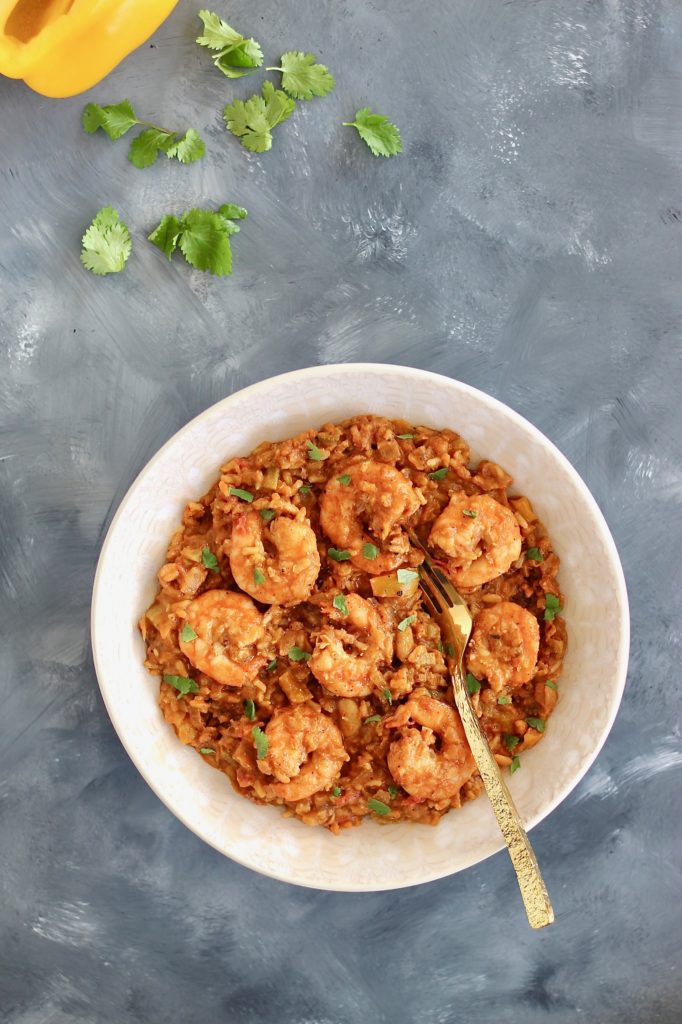
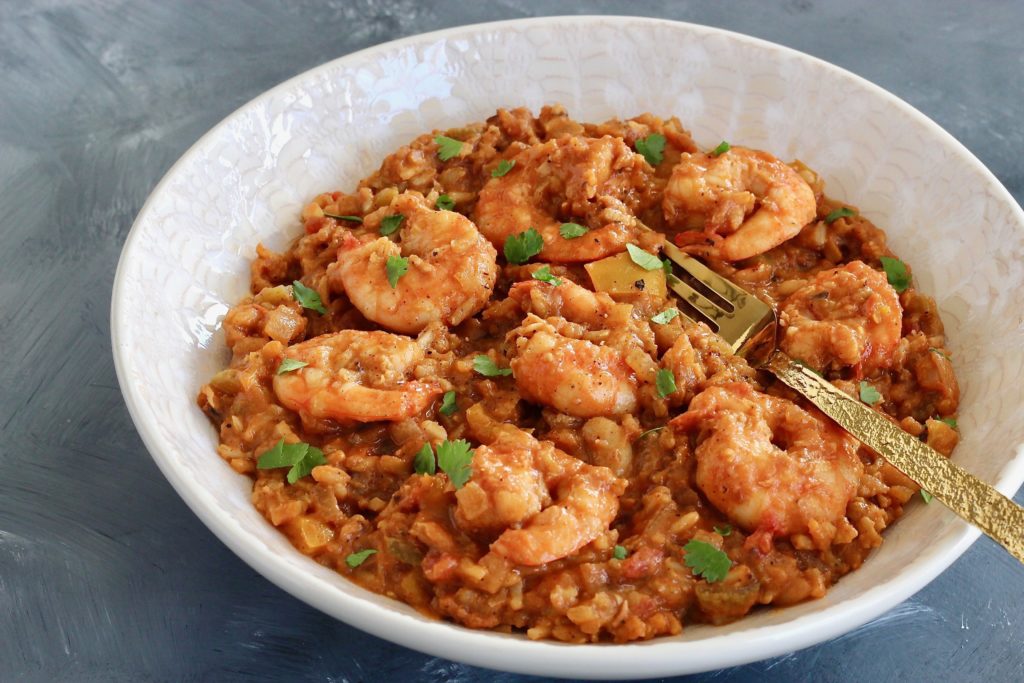
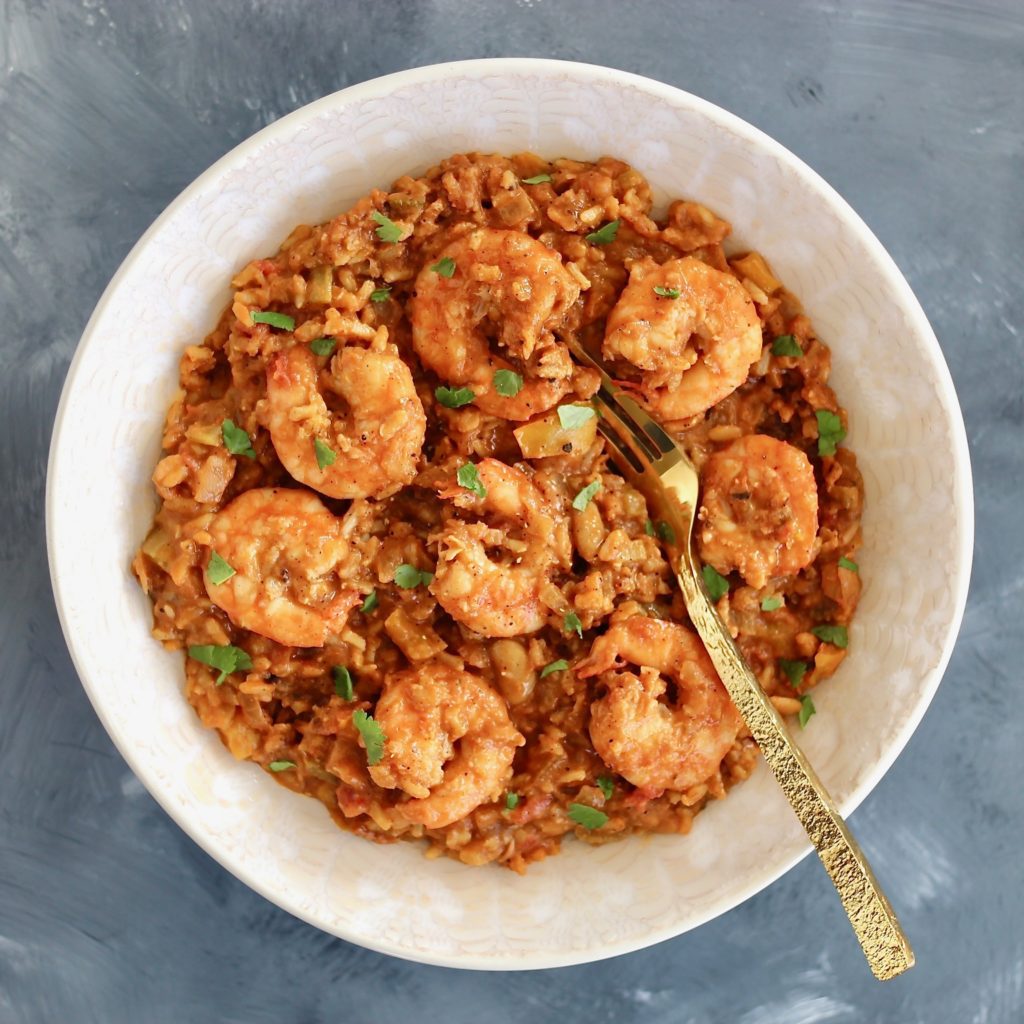
This Brown Rice Shrimp Jambalaya is a creole classic with a healthy twist including whole grains, protein, and colorful vegetables!

This Shrimp Jambalaya is a creole classic with a healthy twist including whole grains, impressive protein, varying veggies, and incredible flavor!

Table of Contents

  • Creole vs Cajun
  • Is brown rice jambalaya healthy?
  • Can I use another grain besides brown rice?
  • One pot meals for the win
  • save this recipe on pinterest:

Creole vs Cajun

Mardi Gras season is upon us and that means it's time for some creole cookin'. I decided to develop this healthy-twist on traditional Jambalaya, a dish consisting of meat and vegetables mixed with rice. This would be considered a creole jambalaya, since it has the addition of tomatoes whereas cajun jambalaya does not.

Is brown rice jambalaya healthy?

This healthy jambalaya is packed with protein from the shrimp and beans. One serving of this dish contains about 10 grams of protein from the shrimp and about 5 grams of plant-based protein from the cannellini beans. The spices used help to pack in major flavor without adding any calories or sodium. Plus, the brown rice used in this recipe is filled with important B vitamins and fiber.

Can I use another grain besides brown rice?

If you have another grain like white rice or farro on hand, you can use that too. Just note the varying cook times on these grains:

  • Brown rice will take about 50 minutes
  • Farro will take about 30 minutes
  • White rice will take about 20 minutes
This Shrimp Jambalaya is a creole classic with a healthy twist including whole grains, impressive protein, varying veggies, and incredible flavor!

One pot meals for the win

Another reason I love this recipe is because it is a one-pot meal. This means less dishes and throw-it-all-in style cooking. Win and win.

Time to throw on some beads and turn your kitchen into a southern festival with this delicious and nutritious creole-style Brown Rice Shrimp Jambalaya. What are some of your favorite dishes to make in celebration of Mardi Gras?

This Shrimp Jambalaya is a creole classic with a healthy twist including whole grains, impressive protein, varying veggies, and incredible flavor!
Print Recipe
4.61 from 23 votes

Healthy Shrimp Jambalaya

This Shrimp Jambalaya is a creole classic with a healthy twist including whole grains, impressive protein, varying veggies, and incredible flavor!
Prep Time20 minutes mins
Cook Time50 minutes mins
Total Time1 hour hr 10 minutes mins
Course: Main Dish Choices
Cuisine: cajun
Keyword: Festival one pot, gluten free, holiday, Mardi Gras, shrimp
Servings: 6 servings
Calories: 330kcal
Author: Mackenzie Burgess, RDN

Ingredients

  • 3 tablespoons olive oil
  • 3 cloves garlic, minced
  • 1 small yellow onion, chopped
  • 5 stalks celery, chopped
  • 1 bell pepper of your choice, diced (green, red, orange, or yellow)
  • 1 cup uncooked long grain brown rice (or grains of your choice*)
  • 2 bay leaves
  • 2 teaspoons garlic powder
  • 2 teaspoons smoked paprika
  • 2 teaspoons chili powder
  • 1 - 15 ounce can crushed or diced tomatoes
  • 3 cups low sodium vegetable or chicken broth
  • 1 15- oz can cannellini beans, thoroughly drained and rinsed
  • 1 lb uncooked tail-off shrimp, peeled and deveined, thawed
  • Salt and black pepper, to taste
  • Cilantro, optional for garnish
instacartGet Recipe Ingredients

Instructions

  • Heat olive oil in a large, deep sauté pan (5 qt. or larger) over medium heat. Add the garlic, onion, celery, and pepper and cook until softened, about 5 minutes.
  • Add brown rice or grains of your choice*, bay leaves, garlic powder, paprika, chili powder, and tomatoes. Stir until well combined, and season with salt and pepper, to taste.
  • Pour in the vegetable broth, stir until combined, and bring to a boil. It will look soupy here but don't worry- this will all be absorbed by the grains. Reduce boil to a simmer, cover, and cook until grains are tender, stirring often to avoid grains sticking to the bottom of the pan. (See specific cooking times below in the note).
  • During the cooking process, if you notice grains are getting dry and sticking to the bottom, add another cup of broth or water.
  • Once grains are cooked, stir in the beans and shrimp and heat until cooked through, about 5 minutes. Serve hot and garnish with fresh cilantro, if desired.

Notes

*If you don't want to use brown rice, you can also use another grain of your choice. This process will take different amounts of times depending on the grain you use. White rice= ~20 minutes, Farro= ~30 minutes, Brown rice= ~50 minutes

Nutrition

Serving: 1g | Calories: 330kcal | Carbohydrates: 45g | Protein: 18g | Fat: 9g | Saturated Fat: 1g | Polyunsaturated Fat: 8g | Cholesterol: 100mg | Sodium: 330mg | Fiber: 8g | Sugar: 5g

save this recipe on pinterest:

This Brown Rice Shrimp Jambalaya is a creole classic with a healthy twist including whole grains, impressive protein, varying veggies, and incredible flavor!

Peanut Butter Hummus

February 1, 2019 by Mackenzie Burgess, RDN 4 Comments

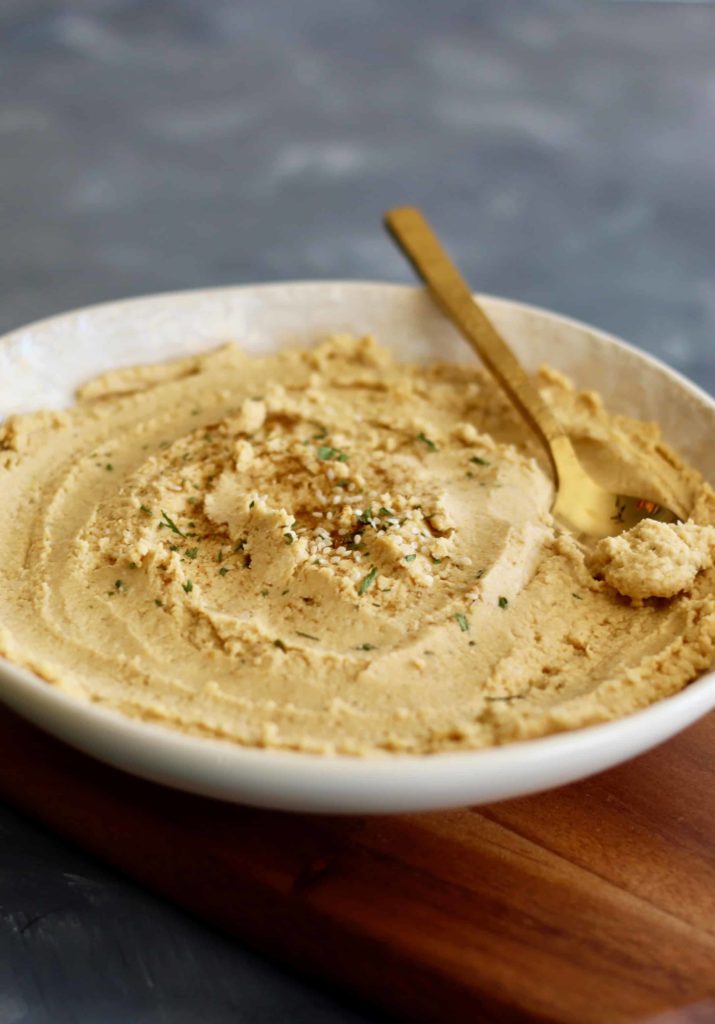
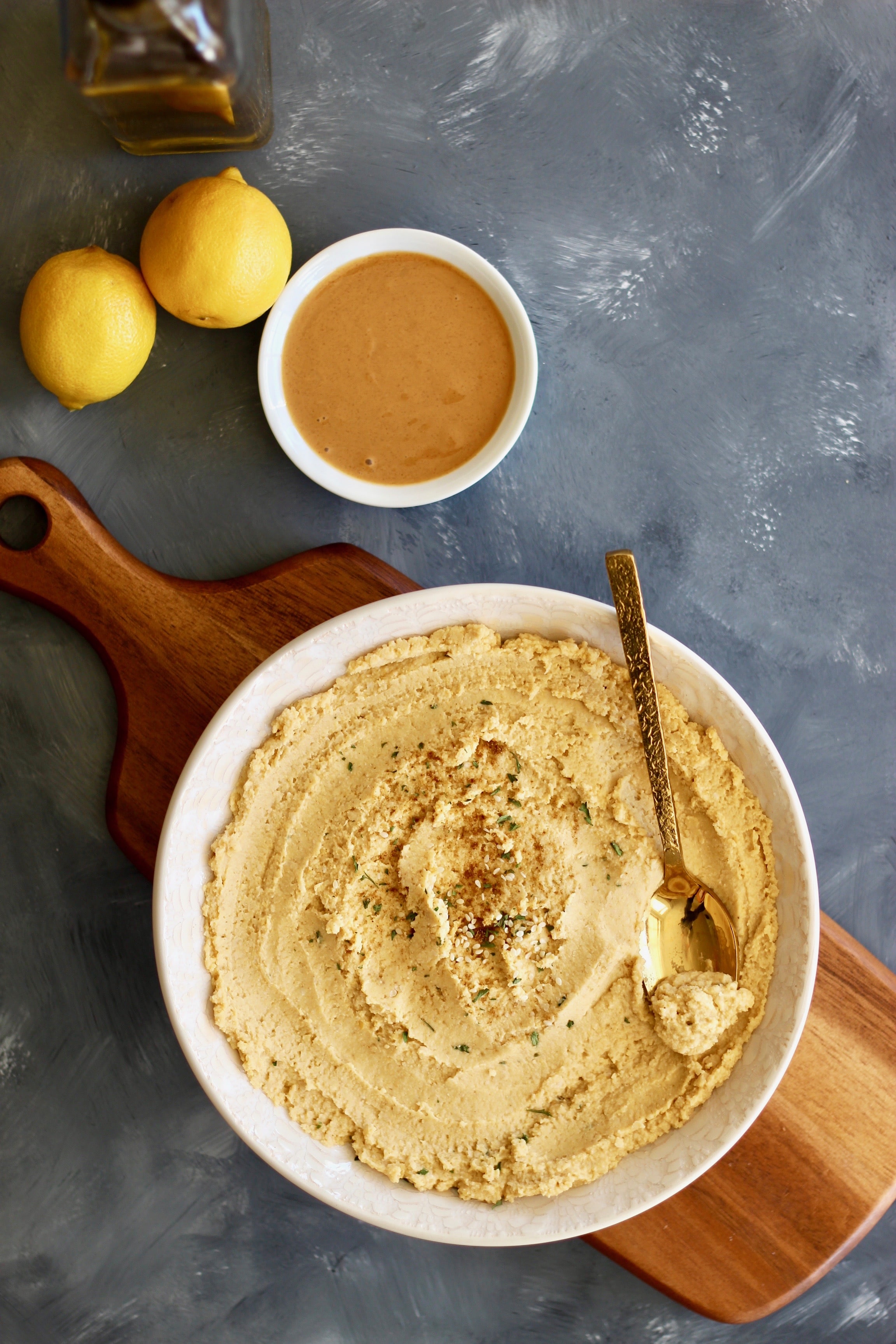
With Super Bowl Sunday right around the corner, hummus is a must. Don't be left dip-less when the grocery shelves empty. Instead, whip up this healthy peanut butter hummus in 10 minutes or less with ingredients right from your pantry.

Whip up this healthy peanut butter hummus in 10 minutes or less with ingredients right from your pantry. No tahini needed!

Do I need tahini to make hummus?

Hummus typically calls for an ingredient called tahini. Tahini, a paste made from sesame seeds, is an awesome ingredient to use in recipes, but it is typically more expensive and an item I don't readily have on hand. Instead, I like to use peanut butter to give it that necessary nuttiest and creamy texture. Peanut butter can be used in everything from yogurt parfaits to thai peanut sauce.

Customize this recipe with your favorite spices or flavors

I love this peanut butter hummus because it is so versatile. You can throw in whatever spices or additional flavors you love. For example, I personally love to blend in about ½ teaspoon cumin and then sprinkle sesame seeds and parsley over the top of the plated hummus for added presentation. You could also blend in roasted red peppers, more garlic, or fresh herbs.

Whip up this healthy peanut butter hummus in 10 minutes or less with ingredients right from your pantry. No tahini needed!

What else can I use hummus for?

Hummus is a flexible dip as it can be served with everything from pita chips to pretzels to veggies. If you have leftovers, spread it over sandwiches, crusted chicken, or stir into soup.

Hummus is a great source of plant-based protein and fiber, keeping you fuller longer on the big game day or just general snacking. Chickpeas are also a great source of antioxidants which may help protect against chronic diseases such as heart disease and cancer.

Peanut Butter Hummus Square
Print Recipe
Be the first to rate this recipe!

Peanut Butter Hummus

Whip up this healthy peanut butter hummus in 10 minutes or less with ingredients right from your pantry. No tahini needed!
Prep Time5 minutes mins
Total Time5 minutes mins
Cuisine: Mediterranean
Keyword: healthy, peanut butter hummus, protein, snack, vegan
Servings: 8 (about 3 tablespoons per serving)
Calories: 90kcal
Author: Mackenzie Burgess, RDN

Equipment

  • Chickpeas
  • Peanut Butter
  • Olive Oil

Ingredients

  • 1 - 15 oz can chickpeas, drained
  • 2 tablespoons peanut butter*
  • 1 lemon, juiced (or 2 tablespoons lemon juice)
  • 1 large clove garlic
  • 1 tablespoon olive oil, plus more as needed
  • ½ teaspoon salt
  • 2 tablespoons water
  • Additional spices or add-ins of your choice (Try a sprinkle of cumin, paprika, bagel seasoning, or cayenne pepper. You could also throw in a couple roasted red peppers or a handful of fresh chopped herbs.)
instacartGet Recipe Ingredients

Instructions

  • Combine all ingredients in a food processor and blend until smooth. If necessary, add more olive oil to reach desired consistency.
  • Store in an airtight container in the fridge for up to one week.

Notes

*You can use sunflower seed butter if you are nut-free.

Nutrition

Serving: 3tablespoons | Calories: 90kcal | Carbohydrates: 10g | Protein: 4g | Fat: 4g | Polyunsaturated Fat: 4g | Sodium: 160mg | Fiber: 2g | Sugar: 1g

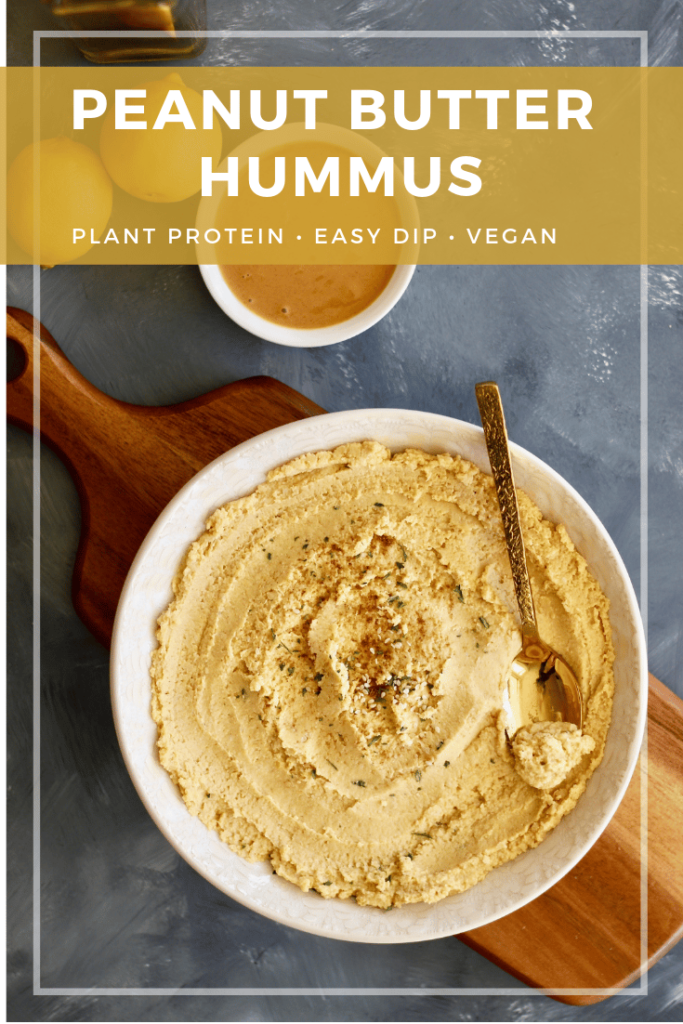
save this easy hummus recipe on pinterest:

Whip up this healthy peanut butter hummus in 10 minutes or less with ingredients right from your pantry. No tahini needed!

Holiday Cocoa Crunch Bark

December 14, 2018 by Mackenzie Burgess, RDN Leave a Comment

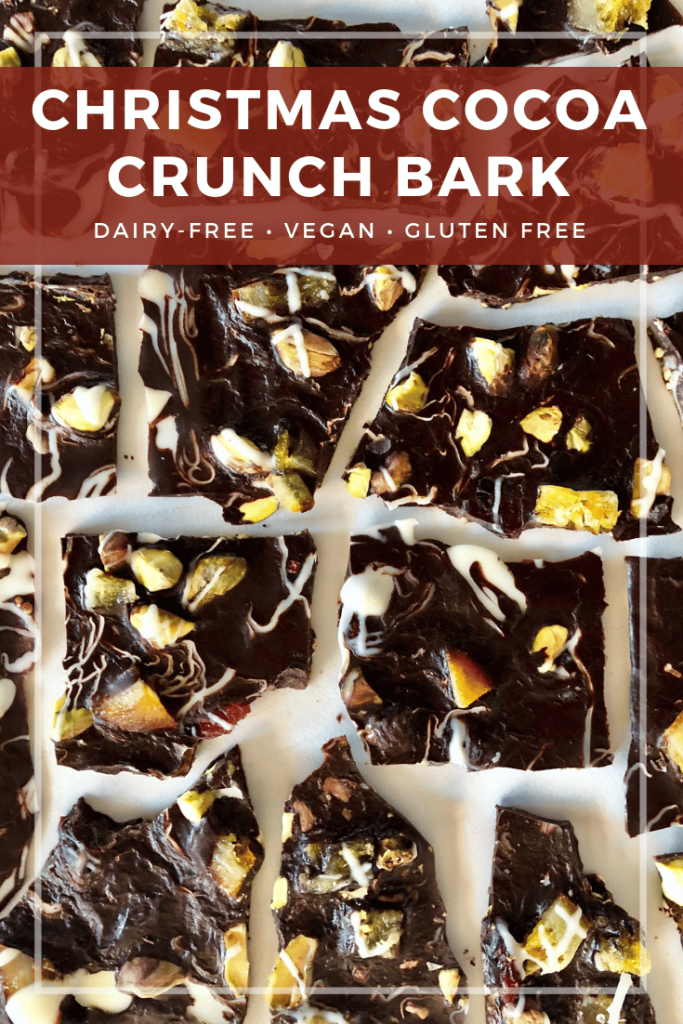
This easy Holiday Cocoa Bark is gluten free, vegan, and lower in sugar. A perfect way to satisfy your chocolate craving during the holidays. It also makes for a great gift.

Satisfy your chocolate craving with this quick sweet treat for the holidays! #easydessert #whitechocolate #holidaytreat #CheerfulChoices

I love chocolate. And if you're like me, when I get a craving for chocolate- I want it and I want it now. Well no worries, I've got you covered. No chocolate needed-just cocoa powder and coconut oil.

How do you make cocoa bark?

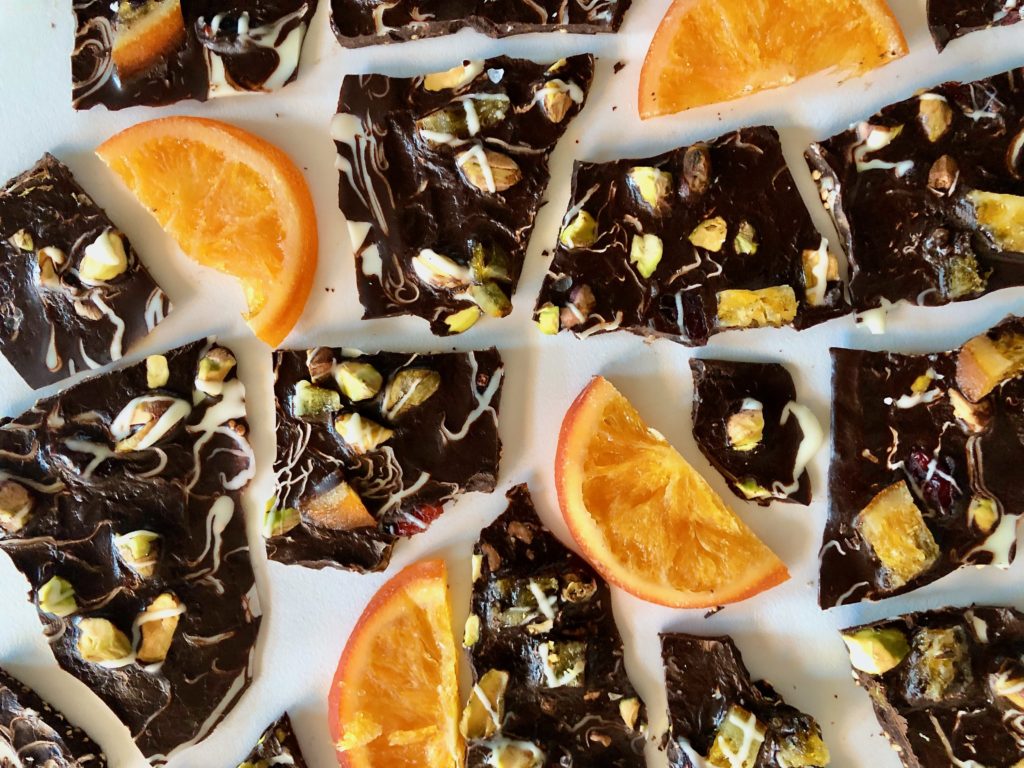
In this holiday version of my Raw Cocoa Crunch Bark, I've paired freshly cracked nuts, tart cranberries, and sweet candied oranges together in a classic raw dark chocolate mixture. It's so easy to make.

First, toast your quinoa.

I love toasting my grains because this helps bring out more flavor.

Mix together coconut oil and cocoa powder.

Instead of melting chocolate, in this cocoa bark I'm using melted coconut oil and cocoa powder. Add in your toasted quinoa for a bit of satisfying crunch. This bark is sweetened by a bit of maple syrup and stevia, making it a lower sugar dessert option.

Finally, add your toppings.

Spread the bark of parchment paper and sprinkle on holiday-inspired toppings or other toppings of your choice. Then freeze for a few hours before breaking into pieces and enjoying!

How do I store the finished holiday bark?

If you are planning to share the bark or want to make a bunch to have on hand, I would double (or triple!) the recipe. When wrapped tightly, the bark will stay good in the freezer for a few months.

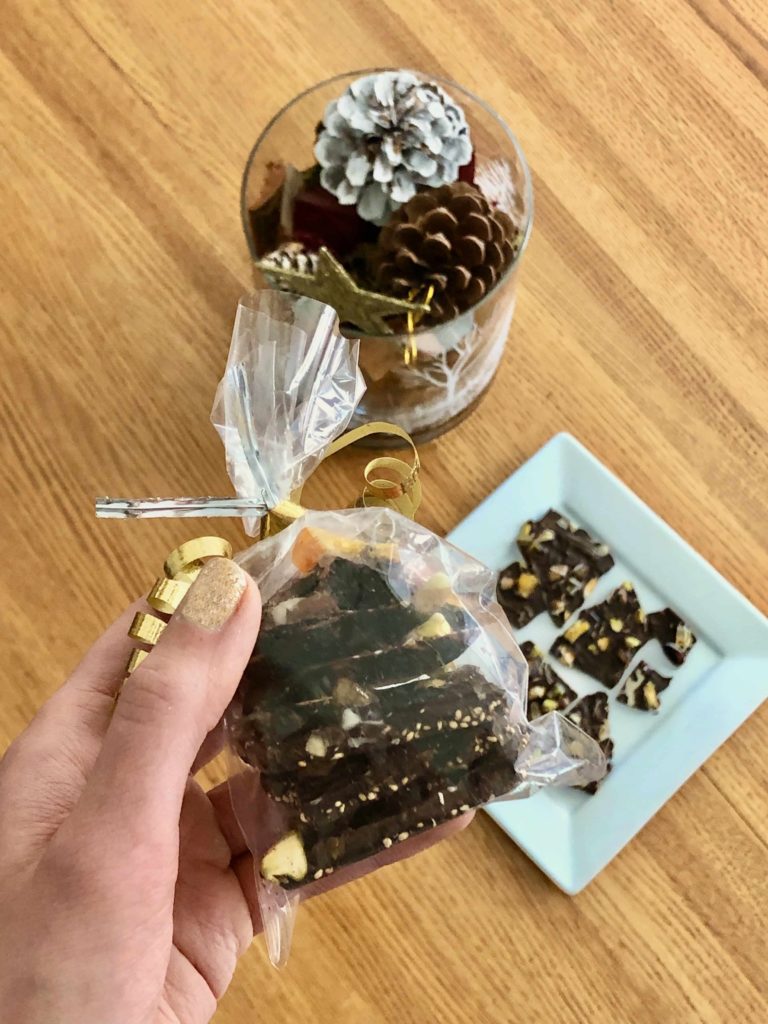
Christmas Cocoa Crunch Bark Gift

How do I gift this bark?

If you are planning on giving the bark as a gift, store in the freezer until ready to wrap up. The bark is best kept in a dry, cool area or in the fridge to ensure it doesn't melt.

Can I customize this cocoa bark?

You can easily switch up the toppings in this recipe. Nuts, dried fruit, seeds, candy pieces-the possibilities are endless! If you come up with a new combo for this Holiday Cocoa Crunch Bark, I would love to see!

Christmas Cocoa Crunch Bark
christmas cocoa crunch bark 3 scaled
Print Recipe
5 from 1 vote

Holiday Cocoa Crunch Bark

Satisfy your chocolate craving with this perfect, quick sweet treat for the holidays. Great for gifting too!
Prep Time10 minutes mins
Total Time10 minutes mins
Keyword: 10 minutes, dessert, easy, holidays, lightly sweetened, no bake
Servings: 30 small pieces
Calories: 50kcal
Author: Mackenzie Burgess, RDN

Equipment

  • Cocoa Powder
  • Coconut Oil
  • Pistachios

Ingredients

  • ½ cup 100% cocoa powder, unsweetened
  • ½ cup coconut oil, melted
  • 2 tablespoons uncooked quinoa
  • 2 tablespoons maple syrup
  • ¼ teaspoon liquid stevia
  • ¼ cup dried cranberries
  • ¼ cup shelled pistachios, roughly chopped
  • 2 tablespoons candied oranges, diced in small pieces
  • ½ teaspoon pink himalayan salt
  • 2 tablespoons melted white chocolate, optional (use vegan if desired)
instacartGet Recipe Ingredients

Instructions

  • Toast raw quinoa over medium-high heat until slightly browned and nutty aroma.
  • Meanwhile, in a small bowl, mix together cocoa powder and melted coconut oil. Stir in toasted quinoa, maple syrup, and stevia.
  • Pour mixture onto a plate or sheet pan lined with parchment paper or wax paper. Sprinkle pistachios, dried cranberries, candied oranges, and salt over the melted chocolate mixture. Drizzle white chocolate over and use a toothpick to create swirl effect if desired.
  • Freeze for 1 hour. Break into pieces and enjoy! Store leftovers in freezer for up to 3 months.

Notes

If you don't have liquid stevia, add in a bit more maple syrup to reach desired sweetness.

Nutrition

Serving: 1piece | Calories: 50kcal | Carbohydrates: 4g | Fat: 4g | Saturated Fat: 3g | Sodium: 27mg | Sugar: 2g
Satisfy your chocolate craving with this quick sweet treat for the holidays! #easydessert #whitechocolate #holidaytreat #CheerfulChoices

Cranberry Orange Carrot Cookies

December 8, 2018 by Mackenzie Burgess, RDN Leave a Comment

Time for a healthy twist on a classic with cranberry orange carrot cookies. I love this recipe because it incorporates fresh fruits, vegetables, whole grains, seasonal spices and has less fat than your traditional cookie.

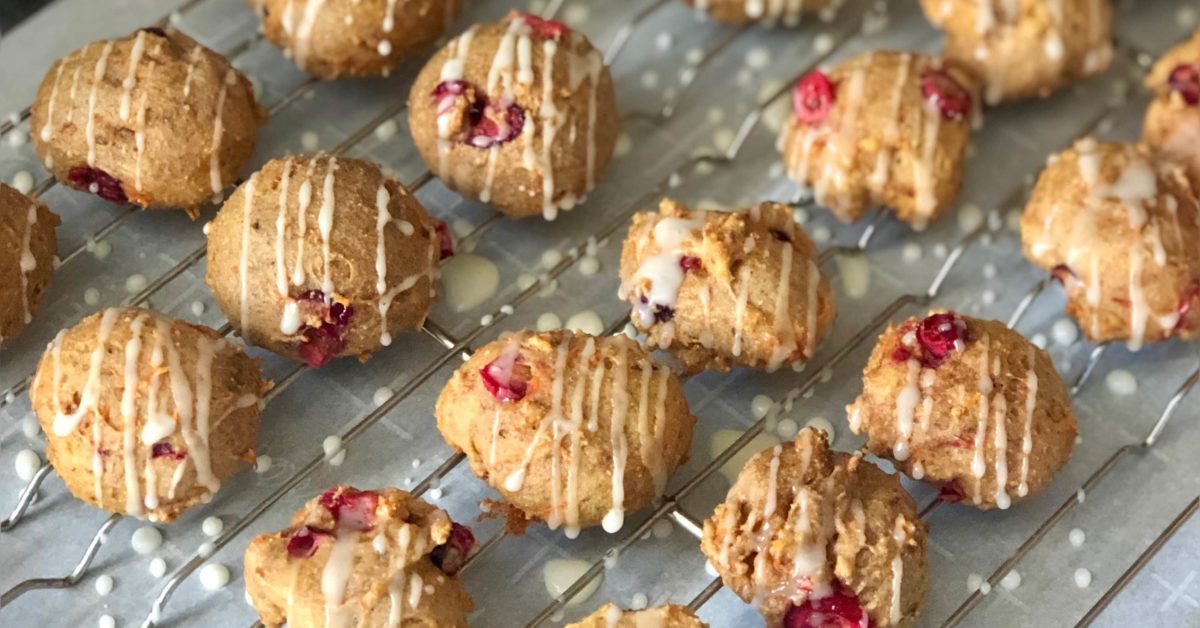
This healthy cranberry orange carrot cookies recipe features fresh cranberries, whole grain flour, carrots, and a delicious glaze on top.

We all want to sneak veggies into sweets without it tasting like veggies. That's why carrots are perfect because they provide color, moisture, and nutrients. These, along with the fresh cranberries and freshly squeezed orange juice, are great sources of vitamin C, A, potassium, and other micronutrients (aka vitamins and minerals). If fresh cranberries are no longer in season, you can use dried cranberries instead.

Vitamin C is especially important this time of year with traveling and family gatherings as it may help boost the immune system to help protect us from getting sick.

I love using whole grain flour because it has almost 4 times the amount of fiber in all-purpose flour. Whole grain flour packs about 13 grams of fiber in just 1 cup, helping you reach the goal of 25-30 grams dietary fiber daily. Try swapping half all-purpose flour for whole grain flour in your favorite baked goods.

This healthy cranberry orange carrot cookies recipe features fresh cranberries, whole grain flour, carrots, and a delicious glaze on top.

If you are looking for a little more rich flavor, you can use butter but I often love swapping butter for whole milk greek yogurt because it provides the necessary fat but also adds some great protein into the mix. Try swapping out butter for greek yogurt at a 1 to 1 ratio if your recipes calls for 1 cup or less. If the recipes calls for 1 cup or greater of butter, try replacing half the butter with an equal amount of yogurt.

Seasonal spices are a great, natural way to add flavor to your recipes. The spices I've chosen pair beautifully with the cranberry orange flavor combination. As a plus, cinnamon is loaded with antioxidants, such as polyphenols, which are good for health. Along with cinnamon, nutmeg has been shown to help with digestive issues like indigestion and stomach ulcers.

This healthy cranberry orange carrot cookies recipe features fresh cranberries, whole grain flour, carrots, and a delicious glaze on top.

Want to have these cranberry orange cookies ready to go for your next sweet craving or cookie swap? Freeze the dough for up to 6 months and then thaw when ready to use.

Ultimately, remember the principles of Intuitive Eating. Realize the holidays are a time for truly enjoying a cookie or two without beating yourself up about it.

This recipe was developed with the help of my favorite chef-Chef Keilen Shigematsu, owner of Table Focus Catering. Happy baking!

This healthy cranberry orange carrot cookies recipe features fresh cranberries, whole grain flour, carrots, and a delicious glaze on top.
This healthy cranberry orange carrot cookies recipe features fresh cranberries, whole grain flour, carrots, and a delicious glaze on top
Print Recipe
Be the first to rate this recipe!

Cranberry Orange Carrot Cookies

This healthy cranberry orange carrot cookies recipe features fresh cranberries, whole grain flour, carrots, and a delicious glaze on top.
Prep Time20 minutes mins
Cook Time10 minutes mins
Total Time30 minutes mins
Course: Recipes
Keyword: carrot, cookie, dessert, fruit, healthy, vegetables
Servings: 3 dozen
Calories: 100kcal
Author: Mackenzie Burgess, RDN

Ingredients

  • ½ cup whole milk greek yogurt or butter
  • 1 cup brown sugar
  • 2 large eggs
  • 1 teaspoon orange zest
  • 2 tablespoons freshly squeezed orange juice
  • 1 teaspoon pure vanilla extract
  • ½ cup finely grated carrots, patted dry
  • 2 cups whole wheat flour or almond flour*
  • ½ teaspoon baking soda
  • ¾ teaspoon salt
  • 2 teaspoons cinnamon
  • ½ teaspoon nutmeg
  • 1 cup dried cranberries or fresh cranberries, roughly chopped

Orange Glaze

  • 1 cup powdered sugar
  • 2-3 tablespoons freshly squeezed orange juice
  • 1 teaspoon orange zest
instacartGet Recipe Ingredients

Instructions

  • Preheat the oven to 350 degrees F. Line a cookie sheet with a baking mat or parchment paper.
  • In a large mixing bowl, mix together the greek yogurt and sugar until fluffy. Beat in the eggs one at a time, then add in the orange zest, orange juice, and vanilla extract. Stir in the grated carrots.
  • In a separate bowl, stir together the whole wheat flour, baking soda, salt, cinnamon, and nutmeg. Add mixture to the wet ingredients, then mix gently, just until the flour disappears. Fold in the cranberries.
  • Drop by rounded tablespoons onto the prepared cookie sheets. Bake for 8-10 minutes, until slightly firm to the touch. Once cooked, transfer to a wire rack to cool completely.
  • While cookies are in the oven, prepare the orange glaze by whisking together powdered sugar, orange juice, and orange zest. Lightly drizzle glaze over cooled cookies. Store cookies in a sealed plastic container for up to one week.

Notes

*If you are using almond flour, cut back on the fat by half as almond flour is much higher in fat. (Use ¼ cup of whole milk greek yogurt or butter instead of ½ cup.)

Nutrition

Serving: 1cookie | Calories: 100kcal | Carbohydrates: 18g | Protein: 2g | Fat: 3g | Saturated Fat: 1g | Polyunsaturated Fat: 2g | Cholesterol: 12mg | Sodium: 72mg | Fiber: 2g | Sugar: 12g
This healthy cranberry orange carrot cookies recipe features fresh cranberries, whole grain flour, carrots, and a delicious glaze on top.

Brussels Sprouts and Sweet Potato Bowl

November 6, 2018 by Mackenzie Burgess, RDN 3 Comments

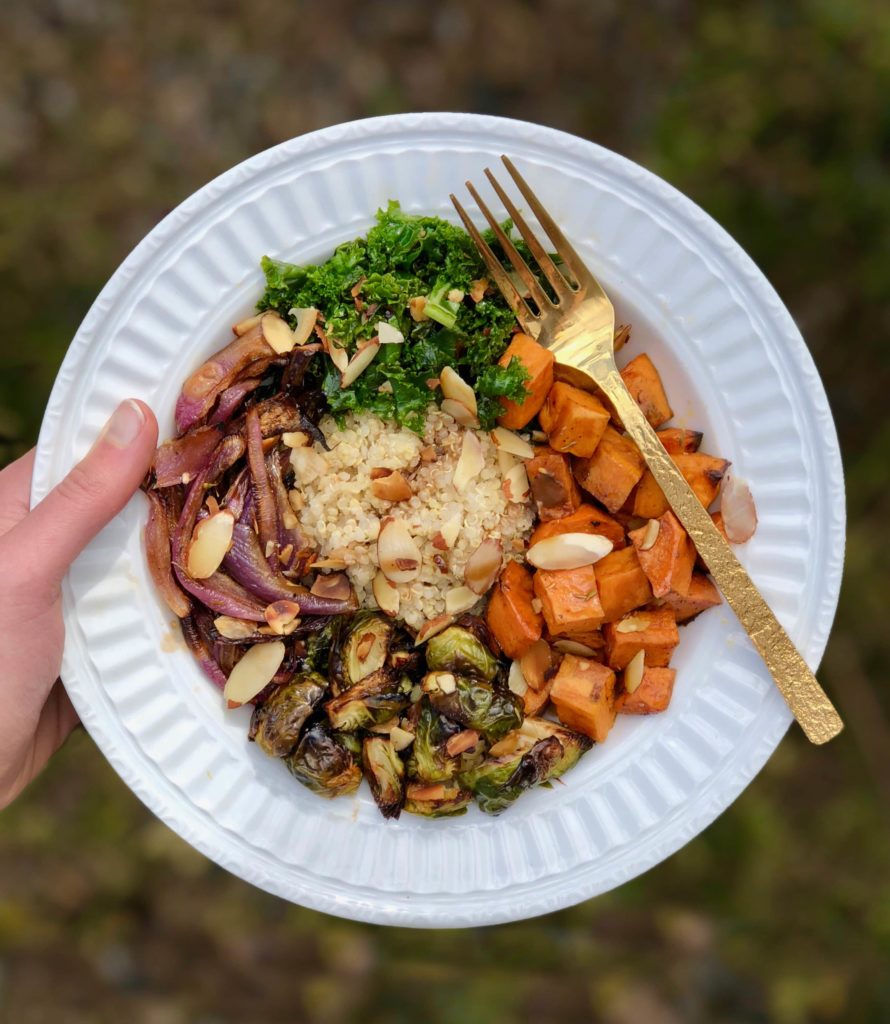
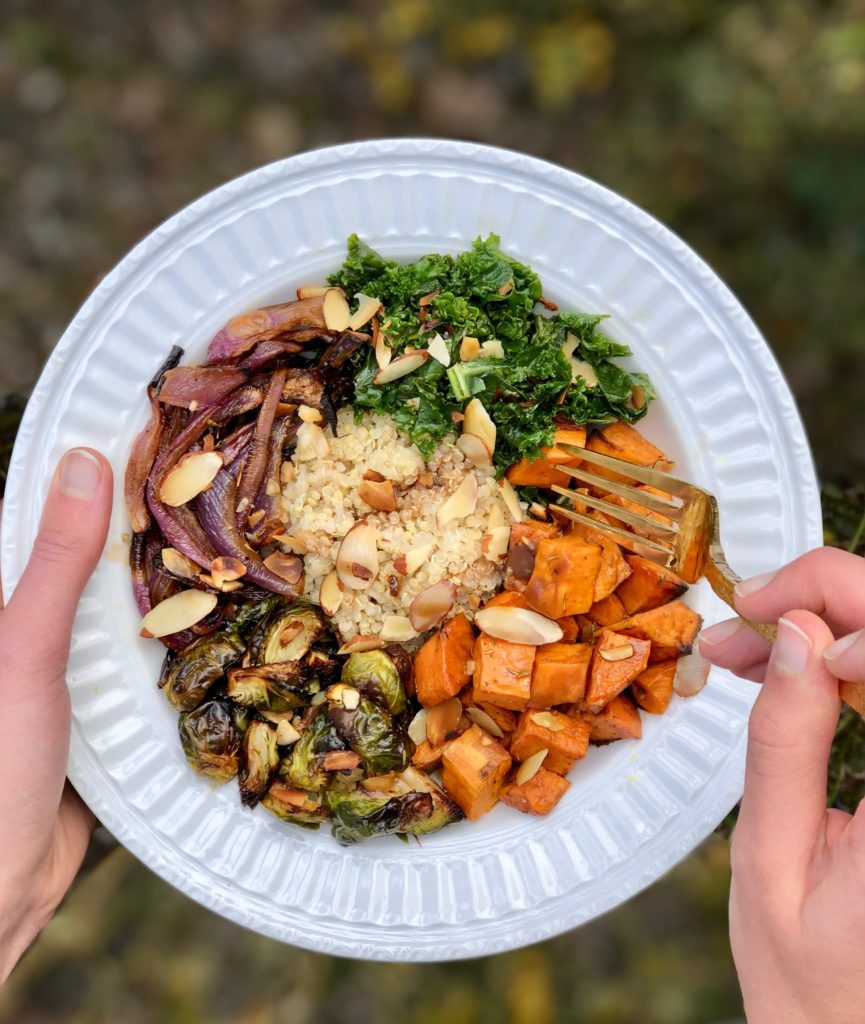
This seasonal Brussels Sprouts and Sweet Potato Bowl is the perfect comfort recipe for fall. It is packed with nutrients and flavor. Plus, it's gluten-free and vegan!

What is a bowl?

There's not strict definition for this dish but they are typically a mix of grains, veggies, a protein source, and some kind of sauce.

Power Bowls are truly the best though. Talk about the perfect combination of different flavors and textures all combined into a satisfying and beautiful bowl.

In this recipe, the slight sweetness of maple syrup and the acidity of the balsamic vinegar make the perfect pairing for the dressing which is incorporated into several parts of the meal. The slightly browned, seasonal veggies provide the necessary crunch whereas the kale provides the raw component to balance out the warm dish.

The other favorite sauce to drizzle over grain is my Thai Peanut sauce. This sauce pairs well with everything from tempeh noodle bowls to crispy tofu bowls.

Close up of holding bowl

This bowl is packed with nutrients

Brussels sprouts and sweet potatoes are some of my favorite cold weather produce picks. High in fiber, antioxidants, vitamin C, and many other important micronutrients-you can feel good about incorporating these into your meal. Quinoa is also a nutritious component of the recipe with a great amount of plant-based protein and fiber. This recipe caters to all kinds of dietary restrictions as it is dairy-free, gluten-free, and vegan.

Brussels Sprouts and Sweet Potato Bowl

Customize it your way

I love bowl meals because they are completely customizable. You can swap out the quinoa for another whole grain such as brown rice or barley. Instead of sweet potatoes, you could use another seasonal vegetable like winter squash or broccoli. If you are looking for a little more protein, you can add in some chicken or turkey breast. Not a fan of sliced almonds? Try pumpkin seeds or balsamic roasted chickpeas for the topping.

Looking for a little more protein?

Protein helps keep us fuller longer. This recipe contains plant-based protein from the quinoa, kale, and almonds. However, if you want to add more protein, you can always layer on crispy tofu, shredded chicken, or more nuts.

Brussels Sprouts and Sweet Potato Bowl

Looking for more bowl options?

Check out my Thai Peanut Umami Bowl recipe. These recipes were both developed with the help of Chef Keilen Shigematsu, owner of Table Focus Catering. A pro tip from Chef Shigematsu: Don't be afraid of high heat when it comes to roasting vegetables. And man, is he right! 450 degrees seems pretty high but you'll be thanking yourself later when those veggies come out perfectly golden and crisp.

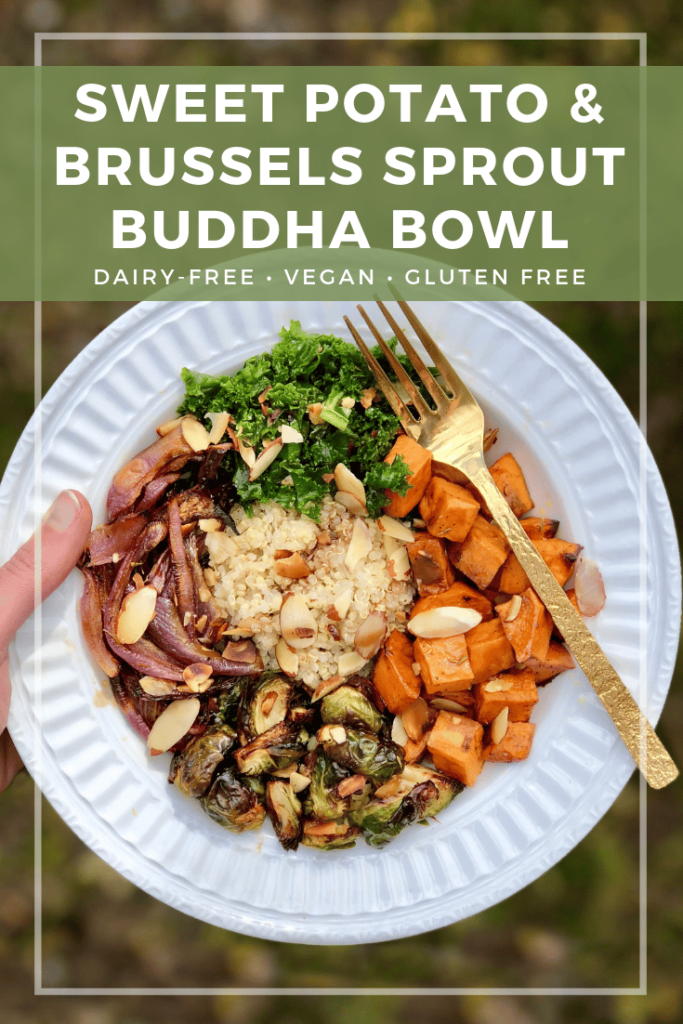
Everyday I'm brusselin' with this seasonal Sweet Potato and Brussels Sprout Buddha Bowl! Perfect comfort bowl for fall. Vegan, whole grain, and delicious.
Print Recipe
4.34 from 12 votes

Brussels Sprouts and Sweet Potato Bowl

Everyday I'm brusselin' with this seasonal Sweet Potato Bowl! Perfect comfort bowl for fall. Vegan, whole grain, and delicious.
Prep Time20 minutes mins
Cook Time30 minutes mins
Total Time50 minutes mins
Keyword: buddha bowl, healthy, seasonal, vegan, vegetarian, whole grain
Servings: 4
Calories: 350kcal
Author: Mackenzie Burgess, RDN

Equipment

  • Pre-rinsed Quinoa
  • Olive Oil
  • Maple Syrup

Ingredients

  • 1 pound sweet potatoes, peeled and cut into ½ inch cubes (about 2 medium sweet potatoes)
  • 1 large red onion, sliced
  • 1 pound brussels sprouts, quartered
  • 2 tablespoons olive oil
  • 4 cups kale, shredded (about ½ bunch kale)
  • 1 cup uncooked quinoa, rinsed and drained
  • ¼ cup sliced almonds, toasted

Maple Balsamic Dressing: (makes about 1 cup)

  • ½ cup extra virgin olive oil
  • ½ cup high-quality balsamic vinegar
  • 3 tablespoons pure maple syrup
  • 1 tablespoon dijon mustard
  • 1 tablespoon dried thyme
  • Salt and pepper, to taste
instacartGet Recipe Ingredients

Instructions

  • Preheat oven to 450 degrees F.
  • To make maple balsamic dressing, combine all ingredients to a small mason jar and shake until combined. Set aside.
  • Line a large baking sheet with foil. Place sweet potatoes and red onion on sheet and toss with ¼ cup of the dressing. Next, place brussels sprouts onto sheet and toss with 2 tablespoons olive oil. Salt and pepper vegetables generously and toss one final time. Roast for 30 minutes, tossing halfway through. Remove from oven and lightly drizzle with more dressing.
  • While the vegetables cook, transfer quinoa to a medium pot, add 2 cups of water and bring to a boil. Then, cover, reduce heat to medium low and simmer until water is absorbed, about 15 minutes. When quinoa is done cooking, remove from heat.
  • In a small bowl, thoroughly massage kale with 1 tablespoon of dressing until kale begins to darken.
  • When everything is done cooking, assemble bowls. Divide quinoa among four bowls, top with roasted vegetables and massaged kale. Sprinkle with sliced almonds and drizzle with more maple balsamic dressing as desired. Mix and enjoy!

Nutrition

Serving: 1grams | Calories: 350kcal | Carbohydrates: 53g | Protein: 12g | Fat: 12g | Sodium: 100mg | Fiber: 12g | Sugar: 13g

save this sweet potato bowl recipe on pinterest:

Brussels Sprouts and Sweet Potato Bowl

SNAP Challenge for a Week: Thoughts and Main Takeaways

September 9, 2018 by Mackenzie Burgess, RDN 2 Comments

Instead of a new diet (see my other recent blog posts where I tried out different trending diets), this week I focused on trying a way of life for some individuals. Since May 2018, nearly 40,000 Americans participant in the Supplemental Nutrition Assistance Program (SNAP), the new name for food stamps.

What is the SNAP Challenge?

The SNAP Challenge originated in 2008 when individuals were challenged people to eat for a week on the budget allowed by food stamps as a part of Hunger Action Month (which is this month!). It varies by state, but the national average is $4.18 a day per person or about $30 for the week. $30 for 7 days of meals. That’s it.

Thoughts

Buying $30 worth of food for the week is hard enough, but I wanted to up the challenge even more by not only eating cheap, but eating healthy and satisfying food as well. I feel this is where the true challenge in our society lies. Sure, it’s great having a dinner consisting of wild caught salmon, fresh kale, and organic quinoa, but the reality for most people is these kinds of meals are not attainable on a regular basis. How do we bridge the gap between nutrition and expense?
After watching YouTube videos on cheap meal prep, searching Pinterest for budget-worthy meals, and typing up my grocery list, I thought I was set for the challenge. Then, I went on King Soopers ClickList to get an estimate of costs and I realized I was way over the $30 budgetary allotment. After cutting out more expensive foods like meat, nuts, and herbs, I ended up with the following grocery list:
  • 2 5.3oz Plain Non-Fat Greek Yogurts: $2
  • Old Fashioned Whole Grain Oats: $1.59
  • Peanut Butter: $1.39
  • 2 Sweet Potatoes: $1.74
  • 1 Avocado: $0.99
  • 12 oz canned tuna: $3.29
  • 1 can chicken broth: $0.59
  • 1 cans chickpeas: $1.58
  • 1 can corn: $0.69
  • 1 can diced tomatoes: $0.73
  • 1 can white kidney beans: $0.89
  • 1 yellow onion: $0.41
  • 2 potatoes: $1
  • 16 oz spinach: $1.50
  • 4oz feta cheese: $2.49
  • 1 dozen eggs: $1.69
  • 4.4 oz blueberries: $2.99
  • 1 Celery bunch: $0.99
  • 5 large carrots: $1
  • 4 bananas: $1
  • 1 broccoli head: $0.69
  • 1 bunch of kale: $1

I did not include buying kitchen basics like olive oil, salt, pepper, and basic spices as these typically do not have to be restocked often. For my meals, I made frozen oatmeal cups, sweet potato quiches, tuna chili potatoes, hard boiled eggs, ants on a log, veggies and homemade hummus (made with peanut butter instead of tahini!), and spinach salads. I got a lot of my inspiration for these recipes from Mind Over Munch.

SNAP Challenge for a WeekSNAP Challenge for a WeekSNAP Challenge for a WeekSNAP Challenge for a Week

On Sunday when I was prepping the food, I felt super motivated and thought perhaps this wouldn’t be too hard. I quickly realized I was very wrong. By Thursday night, I was down to close to nothing. I was sick of eating the same foods and frustrated I wasn't able to have my usual extras over my salads and oatmeal like strawberries, dried cranberries, nuts, chia seeds, flax meal, etc. I also realized since I exercise regularly, my hunger demands were greater than I planned food for. For someone with limited food supply, I could see how recreational exercise could be avoided with fear of not having enough food to fuel the extra energy expenditure.

By the end of the week when I ran out of food, I found myself out to eat at a restaurant with my friends, realizing my immense privilege now more than ever. Everyday, I am fortunate enough to be able to eat without fearing where my next meal might come from. This is not the reality for everyone.

Luckily, there are resources out there that can provide some relief. I did some searching and there are some neat food assistance programs locally where I live in Fort Collins, Colorado. We have a program called Vindeket Foods whose mission is to end food waste by partnering with local stores and nonprofits to rescue food and provide it to the community. There is another program called Double Up Food Bucks where those with food assistance can benefit from getting matched up to $20 in farmers’ market fresh produce purchases. EFNEP is another food and nutrition focused program that often offers free cooking classes with nutritious recipes and food provided. We also have a local food bank, the Larimer County Food Bank, who provides food to anyone who needs assistance on a daily basis. In 2017, they served 37,500 individuals. I have had the privilege to volunteer as a kitchen assistant and help prep healthy meals to be served. To find a food bank near you, click here. If you are from the Fort Collins area, this website is a great resource to connect you to other resources for affordable nutrition such as food pantries and soup kitchens, government and community programs, and food deals.

SNAP Challenge for a Week

Takeaways

Throughout this week, I learned that the SNAP budget can definitely be a great supplemental tool in addition to income, as it’s intended to be, but alone this amount is not substantial enough to healthfully feed an individual. This experience reminded me that food is our fuel and nourishment for our bodies, and is not something that should be taken for granted.

There are many issues surrounding food such as environmental issues, food safety, diet related diseases, obesity, malnutrition, food insecurity, and expenses. Eating healthy on a tight budget is an issue that many Americans, especially those with limited income, run into. Although it’s no easy task, try out a few of these tips to cut your costs when shopping:

  • Purchase shelf stable foods like oats, beans, and rice in bulk
  • Snag the sales by looking ahead at weekly sales flyers
  • Shop the "misfit" produce section that features discounted fruits and vegetables (these items are often blemished or imperfect to store standards but still have comparable nutrition, quality and taste)
  • Buy frozen produce for long-term use (plus, typically produce is frozen at its nutritional peak!)
  • Purchase less expensive proteins like beans, eggs, peanut butter, and canned fish
  • In order to avoid boredom, try meal prepping for a month at time, and freeze various meals. This way, the meals will be different each week (Grab a slow cooker at your local thrift shop and make large batches of meals like soup or chili!)
  • If you have a Farmers' Market near you, utilize the Double Up Food Bucks Program to maximize your intake of delicious, local produce

If you would like to learn more about the SNAP Challenge or try it yourself, click here to read more.

  • « Previous Page
  • 1
  • …
  • 5
  • 6
  • 7

Hi, I'm Mackenzie!

Welcome to Cheerful Choices! Here you’ll find customizable recipes with ingredients “of your choice.” As a dietitian, I also help you gain kitchen confidence through my “Coaching + Cooking” program.

More about me

Meal Prep Ready

  • Pistachio Lettuce Wraps 14 scaled
    Meal Prep Chicken Lettuce Wraps with Pistachios
  • Customizable Power Bowl Featured Image
    Customizable Power Bowl Recipe Template
  • Customizable Protein Pancakes Featured Image
    Customizable Protein Pancakes
  • One Pot Chickpea Pasta 13 scaled
    One Pot Tomato Basil Pasta

Dietitian Pro Tips

  • Meal Plan2
    Your Guide to Setting SMART Nutrition Goals
  • C49A4215
    10 Immune Boosting Foods + Immunity Shot Recipe to Try
  • Quinoa Kitchen Confidence
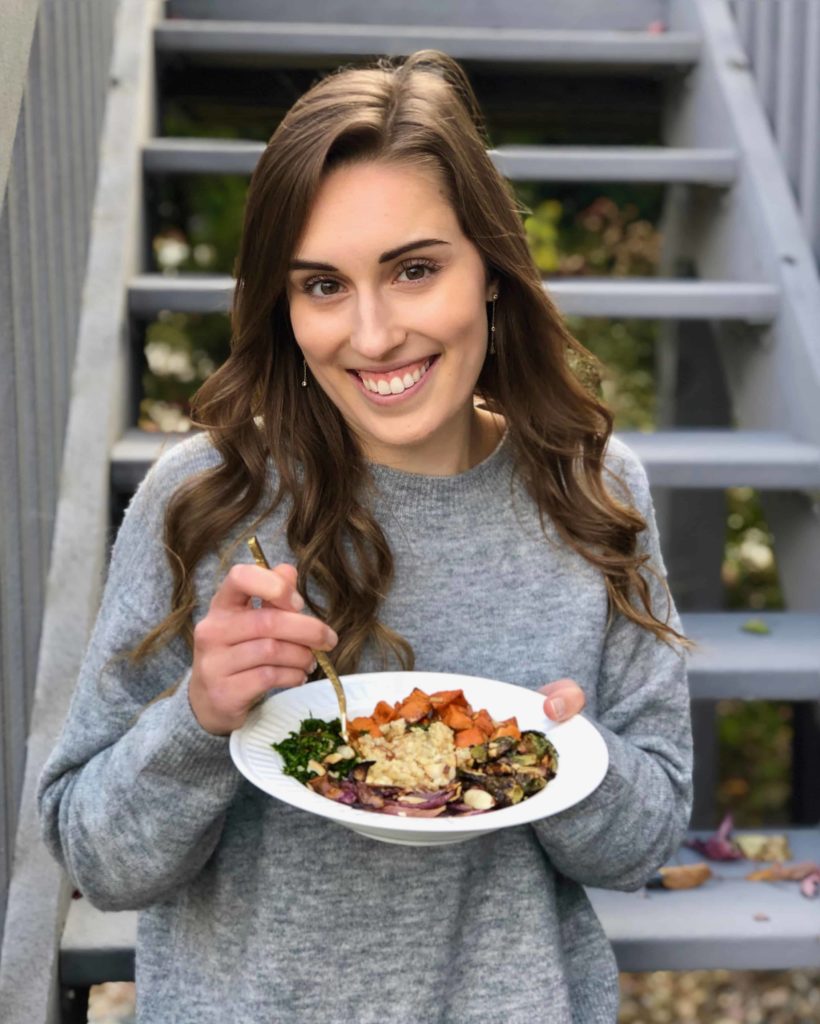
    5 Tips to Improve Your Kitchen Confidence
  • Vegetable Curry 4 scaled
    How to Reuse Leftover Food

Footer

  • Contact
  • Shop
  • Privacy Policy
  • Terms
  • ↑ back to top

Rate This Recipe

Your vote:


Let us know what you thought of this recipe:

Loved it! I customized this recipe by using...
My family loved this one!
Thank you for sharing this recipe, it was delicious!

Or write in your own words:

A rating is required
A name is required
An email is required